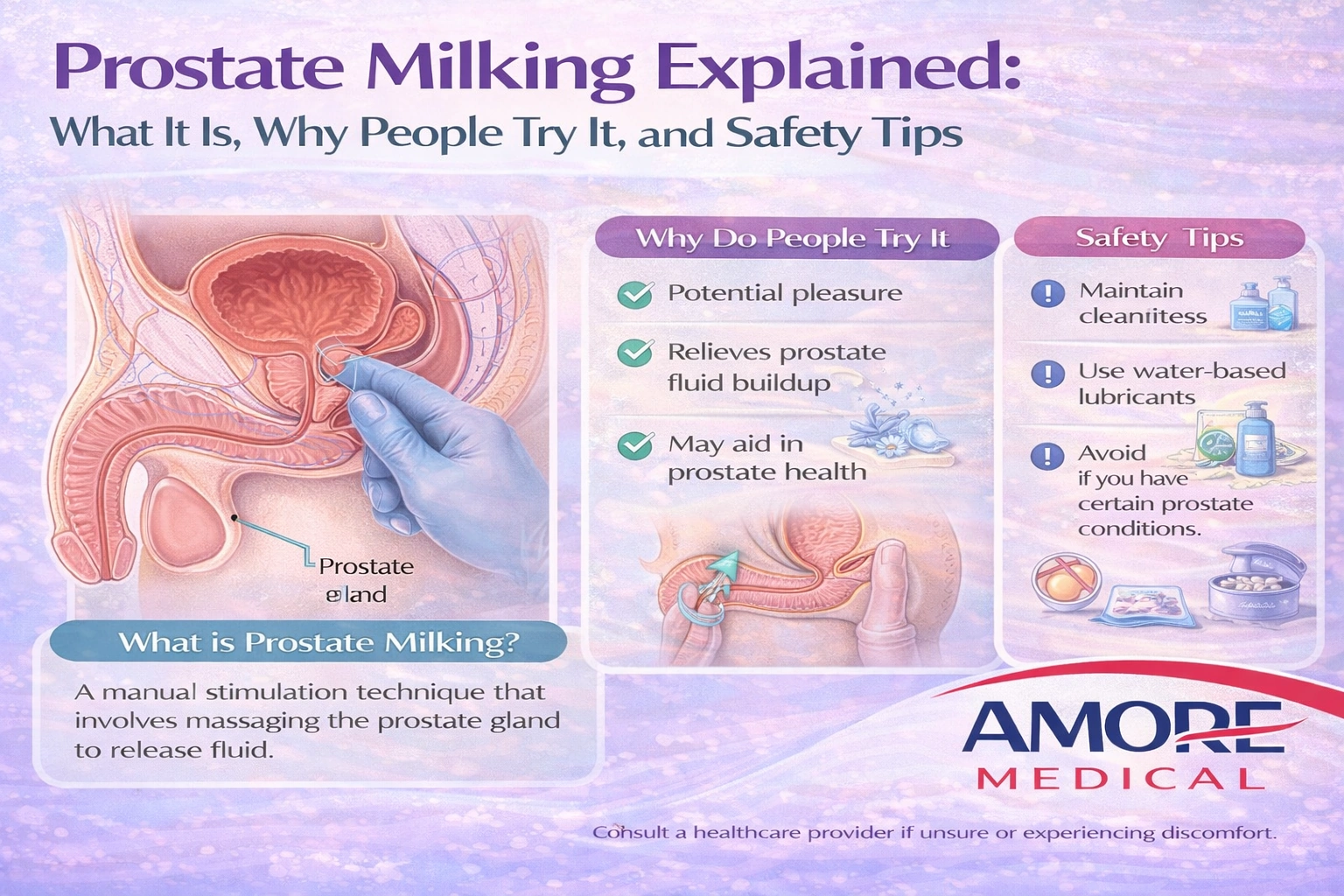
If you have been searching what is prostate milking, chances are you want a clear answer without the hype, confusion, or awkwardness that often surrounds this topic. That is understandable. The prostate is often discussed in two very different ways. In one conversation, it comes up in medical settings around prostate health, prostatitis, or diagnostic testing. In another, it comes up in sexual wellness because some people find prostate stimulation pleasurable. When those two conversations get mixed together, it becomes hard to know what is evidence-based, what is personal preference, and what may be unsafe.
The short version is this: prostate milking usually refers to stimulating the prostate to release prostatic fluid. Some people use the term interchangeably with prostate massage, though “massage” is often the broader term. People may try it for sexual pleasure, curiosity, or because they have heard it can help with prostate symptoms. But those are not all equally supported by evidence, and this is exactly where a practical, medically grounded explanation matters.
For a sexual wellness audience, this topic also overlaps with a larger one: confidence, erections, and intimacy. Some people asking about prostate milking are not only curious about the prostate itself. They are looking for ways to improve sexual response, stronger orgasms, or better bedroom confidence. Others are dealing with erectile dysfunction and wondering whether prostate stimulation is some kind of workaround or treatment. The answer is more nuanced than a yes or no. Prostate stimulation may be part of sexual exploration for some people, but it is not a proven treatment for erectile dysfunction, and it should not replace a real evaluation when erection problems keep happening.
This article takes a confident, practical approach to what is prostate milking. We will look at what the prostate is, what “milking” usually means, why people try it, what claims are more hype than science, what the real risks are, and what safer options look like if the real concern is erectile dysfunction or sexual performance. The goal is not to sensationalize the topic. It is to make it easier to understand your body and make informed, low-pressure decisions about your health and intimacy.
What the Prostate Actually Is
The prostate is a small gland, roughly walnut-sized, located below the bladder and in front of the rectum. It surrounds part of the urethra, which is the tube that carries urine and semen out of the body. One of the prostate’s main jobs is to produce fluid that becomes part of semen. That means it plays a role in ejaculation and reproductive function, even though many people do not think much about it until a sexual or urinary issue comes up.
This anatomy helps explain why the prostate can be discussed in both medical and sexual contexts. Because it contributes fluid to semen and sits in a location that can be reached through the rectum, some people experience prostate stimulation as physically pleasurable. But the prostate is also part of the urinary and reproductive system, which means symptoms involving this area may sometimes signal inflammation, infection, enlargement, or other health concerns. The gland itself is not mysterious. What is often confusing is how casually people move between sexual advice and medical advice without making the distinction clear.
What Is Prostate Milking?
In everyday use, prostate milking usually means stimulating the prostate in a way that leads to the release of prostatic fluid. Some people use the phrase very specifically for fluid expression, while others use it more loosely to mean any kind of prostate massage or stimulation. In clinical settings, prostatic massage has historically been used in some diagnostic contexts to help express fluid for testing, though that does not mean it is a general self-care method for all prostate concerns. Cambridge University Hospitals, for example, describes prostatic massage in a diagnostic setting as pressing on the prostate to expel fluid from the gland.
Outside medical settings, the phrase is more often used in sexual wellness conversations. Some people explore prostate stimulation because they are curious about sensation, because they find it sexually satisfying, or because they have heard claims about stronger orgasms or “draining” the prostate. Cleveland Clinic notes that many people find prostate massage sexually satisfying, but it also states that a prostate massage is unlikely to provide lasting relief from symptoms and will not solve the underlying issue causing a person’s problems.
That distinction is important. A sexual experience and a medical treatment are not the same thing, even if they involve the same part of the body.
Why People Try It
People usually try prostate milking for one of three reasons. Some are looking for sexual pleasure or are curious about a different kind of sensation. Some have heard that it may help with prostate discomfort or chronic pelvic symptoms. Others are hoping it might improve erections, stamina, or overall sexual performance.
The first reason is the most straightforward. Sexual curiosity is common, and for some people prostate stimulation becomes part of consensual intimacy or solo exploration. The second and third reasons need more caution. Various websites, forums, and social media clips often present prostate milking as a kind of hidden wellness trick for prostate health or erectile dysfunction. But the evidence is much weaker than the marketing tone suggests. Cleveland Clinic specifically notes that a prostate massage is unlikely to provide lasting symptom relief, and a UK NHS-affiliated chronic pelvic pain resource says prostate massage is sometimes suggested but there is no clear evidence supporting it.
That does not mean nobody ever feels temporary relief or pleasure from it. It means those experiences should not be confused with a proven medical treatment.
Does Prostate Milking Help Erectile Dysfunction?
This is one of the most important questions for a sexual wellness audience. The practical answer is no, not in the sense of being an established treatment for erectile dysfunction. Erectile dysfunction can happen for many reasons. NIDDK explains that ED may result from conditions affecting blood vessels, nerves, or hormones, as well as certain medicines, mental or emotional issues, and lifestyle behaviors. In other words, erections are influenced by circulation, nerve signaling, hormones, mental health, medications, and overall wellness. Prostate stimulation does not directly correct those root causes.
Sometimes people believe prostate milking “works” for ED because it changes the sexual experience, adds novelty, or creates stronger focus on pleasure. That can feel meaningful, but it is not the same as medically treating ED. If a person’s erections are less reliable because of diabetes, cardiovascular disease, stress, low testosterone, medication side effects, or relationship anxiety, the real solution usually involves identifying the cause and treating it directly. NIDDK notes that treatment may include lifestyle changes, counseling, and ED medicines depending on the situation.
So if the real issue is erection problems, prostate milking should be seen as sexual exploration at most, not as a substitute for care.
What People Mean When They Say It Feels Good
When people describe prostate stimulation as pleasurable, they are usually talking about a different quality of sensation than penile stimulation alone. The prostate sits near nerve-rich structures, and for some people stimulation there may feel deeply pressurized, internal, or intense. But it is important to be realistic here too. Not everyone enjoys it. Not everyone wants it. And not every body responds the same way.
This is one reason communication matters so much in partnered intimacy. A practice that one person finds satisfying may feel uncomfortable, emotionally loaded, or simply uninteresting to another. There is no universal response that determines whether someone is sexually healthy, open-minded, or “doing sex right.” The healthiest approach is still the simplest one: curiosity without pressure, and clear consent before anything happens.
What the Real Risks Are
Because prostate milking is often talked about casually online, people sometimes underestimate the risks. Cleveland Clinic lists several potential problems associated with prostate massage, including injury to the rectum, pain or soreness, and worsening of hemorrhoids. These are not abstract concerns. The tissue involved is delicate, and rough pressure, poor hygiene, sharp nails, or ignoring pain can turn exploration into an injury.
There are also situations where prostate manipulation is specifically discouraged. NICE guidance for acute prostatitis says not to collect prostatic secretions through prostatic massage in that setting because it may be very painful and could lead to septicaemia or a prostatic abscess. In other words, if someone has symptoms of acute prostate infection, this is not a situation for experimenting. It is a situation for medical care.
That is one reason a symptom-based perspective matters. If a person has fever, pelvic pain, painful urination, marked prostate tenderness, chills, or feels acutely ill, the prostate should not be treated like a wellness project. It should be assessed medically.
Safety Tips That Actually Matter
If someone chooses to explore prostate stimulation in a consensual sexual context, safety matters much more than intensity. A gentler, slower, cleaner approach is always better than trying to force an outcome. Practical safety habits include:
- making sure everyone involved clearly consents and can change their mind at any time,
- using plenty of lubricant,
- avoiding rough pressure or rushing,
- keeping hands, nails, and any toys clean,
- using products designed for anal use if toys are involved,
- stopping if there is pain, bleeding, or ongoing discomfort,
- avoiding exploration if there are active hemorrhoids, rectal bleeding, severe pain, or signs of infection.
These tips are not about taking the excitement out of intimacy. They are about preventing avoidable injury and making the experience more respectful of the body. “It hurts but maybe that means it’s working” is not a helpful mindset here. Pain is feedback, not a goal.
When You Should Not Do It
There are situations where prostate milking or massage is not something to try. Active infection is one of the biggest examples. As noted above, acute prostatitis is a setting where prostatic massage can be painful and potentially dangerous. It also makes sense to avoid it when there is rectal bleeding, a painful hemorrhoid flare, unexplained anal or pelvic pain, recent rectal injury, or any medical issue that makes anal manipulation unsafe or extremely uncomfortable.
This is also not a wise substitute for seeing a clinician when symptoms such as urinary burning, fever, pelvic pressure, difficulty urinating, or pain with ejaculation are present. If someone is hoping prostate milking will “clear something out,” that is usually a sign to pause and ask whether the body is actually trying to signal a medical issue.
Common Myths About Prostate Milking
There are a few myths that are worth challenging directly.
Myth one: it’s a proven way to improve prostate health. Current evidence does not support presenting prostate massage as a proven long-term solution for prostate symptoms, and some guidelines specifically caution against it in acute infection.
Myth two: it treats erectile dysfunction. Erectile dysfunction usually needs evaluation of vascular, nerve, hormone, medication, and psychological factors. Prostate stimulation does not replace that workup.
Myth three: if it is uncomfortable, that means you need more pressure. No. Pain is a sign to stop, slow down, or reconsider the whole approach. Rectal or pelvic injury is not a marker of success.
Myth four: it tells you whether your prostate is healthy. Cleveland Clinic notes that you cannot accurately check your prostate health through a self-exam and should talk to a healthcare provider if you have concerns about your prostate.
What to Do If the Real Problem Is ED or Low Sexual Confidence
For many readers, the more useful conversation is not really about prostate milking at all. It is about why sexual performance feels less reliable, less confident, or less satisfying than it used to. If that is the real issue, evidence-based treatment is usually a better path than trying random techniques and hoping one of them will solve everything.
NIDDK notes that health care professionals treat the underlying cause of erectile dysfunction when possible and otherwise focus on improving sexual function. Treatment options may include lifestyle changes, counseling, and ED medicines. Research also shows that a healthy diet and lifestyle habits that lower the risk of diabetes, heart disease, and obesity can also lower the risk of ED or improve symptoms.
That means safer, more effective next steps may include reviewing medications, checking blood pressure and blood sugar, considering whether stress or relationship strain are part of the picture, evaluating testosterone when symptoms fit, and discussing whether prescription ED treatment is appropriate. These options may sound less mysterious than prostate milking, but they are much more likely to address the real issue.
Why Communication Still Matters Most
Whether prostate stimulation is part of someone’s sexual life or not, the bigger lesson is still about communication. Sexual wellness gets better when people can talk honestly about what feels good, what feels uncomfortable, what they are curious about, and what they do not want. Many problems become much harder when they are hidden behind embarrassment.
This is especially true for couples dealing with erection changes, lower desire, or intimacy that has started to feel stressful. Sometimes the most helpful shift is not a new technique at all. It is the ability to say, “I’m feeling anxious about this,” or “I want to explore, but I want to go slowly.” That kind of honesty often does more for intimacy than any one sexual practice.
Final Thoughts
So, what is prostate milking? In simple terms, it is stimulation of the prostate intended to release prostatic fluid, and people may explore it for sexual pleasure, curiosity, or because they have heard health claims about it. But those health claims deserve caution. Prostate stimulation may be sexually satisfying for some people, but it is not a proven treatment for erectile dysfunction, and it should not be used as a substitute for proper care when symptoms suggest infection, inflammation, or ongoing sexual health concerns.
The safest path is practical and unglamorous: know the difference between sexual exploration and medical treatment, avoid pressure or pain, and seek real evaluation when the concern is persistent ED, pelvic pain, urinary symptoms, or prostate health. Sexual wellness tends to improve most when people stop chasing mystery fixes and start getting clear about what their bodies actually need.