If you have been looking into foods for erectile dysfunction, you are probably hoping for a practical answer you can actually use. Most men do not want vague advice. They want to know whether what they eat can affect erections, whether better food choices can lower ED risk, and whether lifestyle changes are worth trying alongside medical care. The short answer is yes—diet can matter, but not in the exaggerated way the internet often suggests.
There is no single “miracle food” that instantly fixes erectile dysfunction. But there is strong reason to believe that eating in a way that supports blood flow, heart health, metabolic health, and hormone balance may also support erectile function. That is because erections depend heavily on healthy circulation. When blood vessels are under strain, erections are often one of the first places men notice the change. In that sense, penis health and cardiovascular health are closely connected.
At Amore Medical, we approach sexual wellness as part of whole-body wellness. Erectile dysfunction can be related to blood flow, hormones, stress, medication side effects, diabetes, sleep problems, relationship tension, or a combination of these factors. Food is not the entire answer, but it can be part of a smarter plan. For some men, improving diet helps lower ED risk and supports better sexual performance over time. For others, it strengthens the foundation underneath other treatments, whether that is medication, hormone support, counseling, or non-invasive therapies.
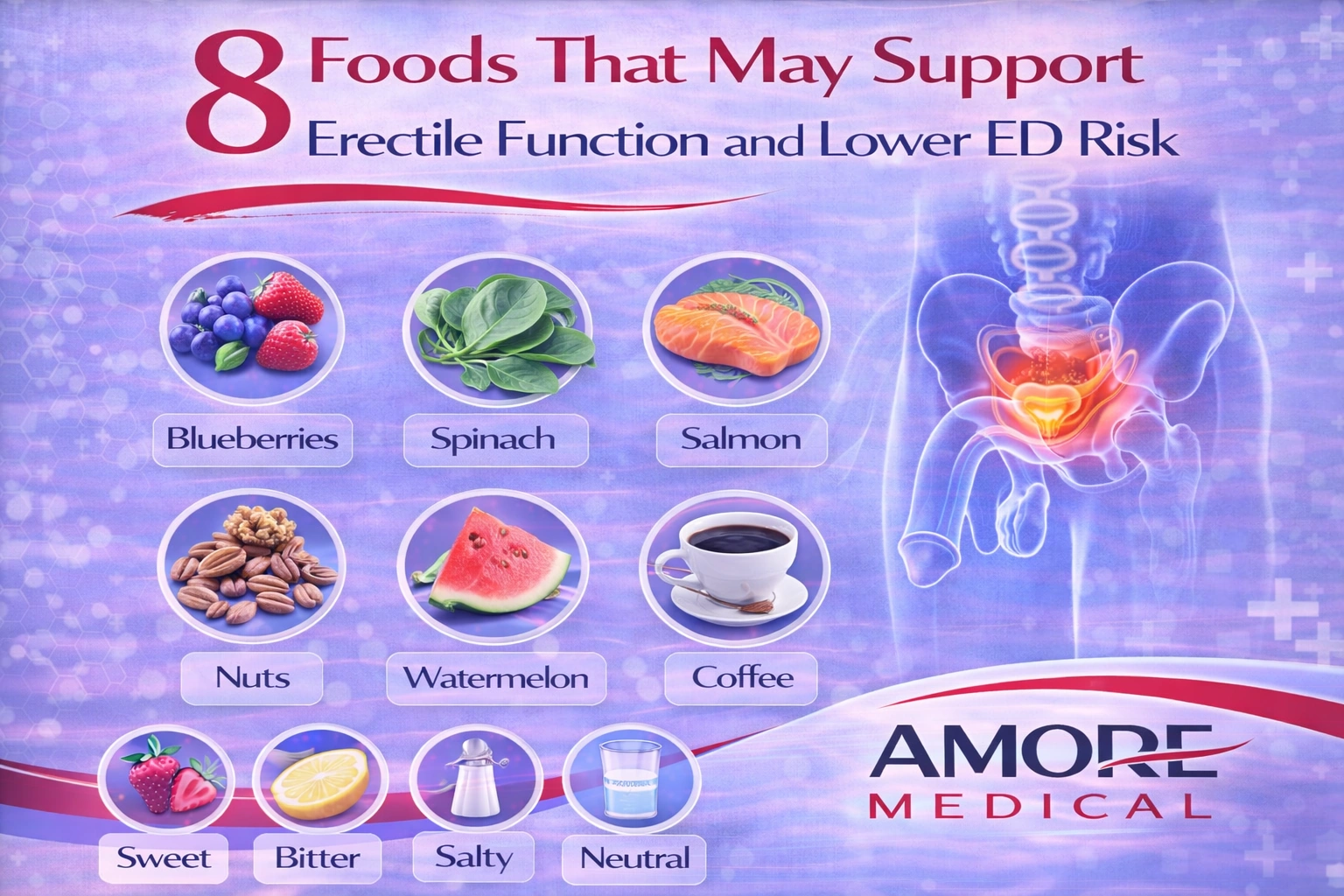
This article explores eight foods that may support erectile function, explains why they may help, and shows how they fit into a larger, realistic approach to erectile dysfunction care. The goal is not hype. It is to give you practical, evidence-informed ways to think about food, circulation, and sexual health.
Why Food Matters for Erectile Function
Erections are not only about desire. They are also about blood flow. During arousal, blood vessels need to open and deliver enough blood into the penis to create and maintain firmness. If circulation is weaker than it should be, erections may be softer, slower to develop, or harder to maintain. This is one reason erectile dysfunction is often more common in men with high blood pressure, diabetes, high cholesterol, obesity, smoking history, and low physical activity.
That is also why many of the same eating patterns that are considered “heart healthy” may support better erectile health too. A diet that helps reduce inflammation, support blood vessel function, improve blood sugar control, and maintain a healthy weight can support the systems erections rely on. In other words, when you eat for your heart, you are often also eating for your sexual health.
So when people ask about foods for erectile dysfunction, the most useful answer is not usually one isolated ingredient. It is a pattern of eating that supports circulation and lowers the health risks most commonly linked to ED.
1. Leafy Greens
Leafy greens such as spinach, arugula, kale, romaine, and Swiss chard are often included in conversations about erectile health because they are rich in natural nitrates and other nutrients that support vascular health. In the body, nitrates can be converted into compounds involved in blood vessel relaxation, which matters because erections depend on blood vessels being able to open effectively.
Leafy greens also support overall cardiovascular wellness. They are low in calories, high in fiber, and packed with nutrients that fit well into a diet designed to improve blood pressure, weight, and circulation. That makes them a smart addition for men who are not only trying to think about erections, but also about the broader health issues that often contribute to ED.
Adding greens does not have to be extreme. A daily salad, a side of sautéed spinach, or greens blended into a smoothie is a practical start. In sexual wellness care, consistency matters more than dramatic short-term changes.
2. Berries
Berries such as blueberries, strawberries, blackberries, and raspberries are another strong addition to a diet aimed at supporting erectile function. They contain antioxidants and plant compounds that are often associated with better vascular health. That matters because oxidative stress and inflammation can affect blood vessel function over time, and blood vessel function is central to erection quality.
Berries are also one of the easiest healthy swaps to make. They can replace more sugary desserts, pair well with yogurt or oatmeal, and fit naturally into a heart-smart eating plan. Men who are trying to improve blood sugar control, reduce processed food intake, or maintain a healthier weight often find berries easier to sustain than more restrictive diet changes.
That kind of sustainability matters. Better erections are rarely the result of one “perfect” meal. They are more often the result of better patterns repeated over time.
3. Fatty Fish
Fatty fish such as salmon, sardines, trout, mackerel, and tuna can be especially helpful because they provide omega-3 fatty acids and high-quality protein. In the bigger picture of erectile health, fish supports heart health, and heart health supports blood flow. Men with diets built around better fats and less heavily processed food often end up supporting the exact vascular system erections depend on.
Fatty fish can also be a practical replacement for more processed or fried meats that may work against cardiovascular health over time. Swapping in grilled salmon, baked trout, or sardines a couple of times a week may not sound like a sexual health treatment, but in a broader vascular sense, it is part of one.
At Amore Medical, this is the kind of shift we want patients to understand. Diet does not need to be marketed as a magic cure to be meaningful. It just needs to support the systems that matter most.
4. Nuts and Seeds
Nuts and seeds can be a smart choice for men thinking about foods for erectile dysfunction because they offer healthy fats, minerals, fiber, and plant nutrients that support cardiovascular and metabolic health. Walnuts, almonds, pistachios, pumpkin seeds, chia seeds, and flaxseeds all fit into this category.
Pistachios, in particular, are often mentioned in men’s health discussions because they contain arginine, an amino acid involved in nitric oxide pathways that affect blood vessel function. It would be an exaggeration to describe pistachios as a standalone ED treatment, but as part of a circulation-friendly eating pattern, they make sense.
Nuts are also useful because they can help replace lower-quality snacks. Swapping chips or sugary snacks for a handful of nuts is the kind of simple daily change that can support weight control, better blood sugar patterns, and healthier eating overall.
5. Beans and Lentils
Beans, lentils, and other legumes deserve more attention in sexual health conversations than they usually get. They are rich in fiber, plant protein, and minerals, and they tend to support steadier blood sugar and better metabolic health. That is important because diabetes and insulin resistance are closely linked to erectile dysfunction.
Men sometimes focus only on protein sources when thinking about physical performance, but fiber and blood sugar control matter just as much. A bowl of lentil soup, black beans with dinner, or chickpeas added to a salad is not only a nutrition choice. It is part of a strategy that may help reduce some of the metabolic strain associated with ED risk.
Legumes also fit well into a Mediterranean-style or plant-forward eating pattern, which is one of the most commonly recommended approaches for both heart health and erectile function.
6. Tomatoes
Tomatoes are another practical food worth including. They are rich in antioxidants, especially lycopene, and they fit easily into a heart-healthy diet. Fresh tomatoes, cooked tomato sauces, and roasted tomatoes can all be part of a balanced eating pattern that supports circulation and lowers inflammatory stress.
Tomatoes by themselves are not an ED treatment, but they belong in the category of foods that work in your favor rather than against you. Men who consistently build meals around vegetables, legumes, fish, healthy fats, and less processed food often see benefits that extend beyond weight or cholesterol numbers. Sexual function can improve too because the vascular environment improves.
This is the larger principle that matters more than any one ingredient: foods that support blood vessels may also support erections.
7. Whole Grains
Whole grains such as oats, quinoa, brown rice, barley, and whole-grain bread can help support erectile function indirectly by improving metabolic health and helping with weight management, blood sugar control, and overall cardiovascular health. When compared with highly refined grains, whole grains generally create a steadier energy pattern and work better in an eating plan designed to lower long-term health risk.
For many men, swapping refined carbohydrates for more whole-food versions is one of the easiest ways to improve daily nutrition without feeling like they are on a restrictive diet. Oatmeal instead of sugary cereal, brown rice instead of white rice, or more fiber-rich breads instead of heavily processed bread products are simple shifts that add up over time.
In sexual wellness care, small changes like this matter because they are sustainable. Sustainable changes are the ones most likely to influence erections over the long run.
8. Olive Oil
Olive oil is one of the signature ingredients of a Mediterranean-style eating pattern, and that eating pattern is often associated with better cardiovascular health and lower ED risk. Olive oil can help shift the overall quality of fat in the diet away from more processed or trans-fat-heavy foods and toward a healthier pattern that supports blood vessels.
This does not mean pouring olive oil on everything is an ED solution. It means using it as part of a broader approach to eating that emphasizes vegetables, legumes, fish, whole grains, nuts, and less processed food. In that context, olive oil is one of the simplest upgrades a person can make in daily cooking.
Using olive oil for cooking, dressing salads, or replacing less healthy fats is not glamorous, but it is practical—and practical habits are often what make the biggest difference over time.
What These Foods Have in Common
The most important thing about these eight foods is not that each one has a separate “male performance” effect. It is that together they fit into a pattern that supports circulation, heart health, metabolic balance, and inflammation control. That pattern matters far more than trying to turn one food into a magic treatment.
In other words, the real takeaway is not “eat one tomato and fix ED.” It is “build meals that consistently support the systems erections depend on.” That is a much more realistic and medically grounded way to think about nutrition and sexual performance.
Foods and Habits That May Work Against Erectile Function
Just as some foods may support erectile health, others may work against it when they dominate the diet. Heavy reliance on ultra-processed foods, trans fats, excessive added sugar, and patterns that drive weight gain, inflammation, and poor blood sugar control can increase the kinds of health problems that often show up alongside ED.
That does not mean you need a perfect diet. It means the overall pattern matters. A diet built mostly around fried foods, sugary drinks, refined snacks, and excessive alcohol is much less likely to support circulation than a diet built around vegetables, fiber, healthy fats, and whole foods.
In sexual wellness care, avoiding harmful patterns is often just as important as adding supportive foods.
When Food Helps Most—and When It Is Not Enough
It is important to be honest here. Food can help, but food alone is not always enough. If erectile dysfunction is mild and strongly tied to lifestyle, then improving diet, sleep, activity, weight, and stress may lead to noticeable improvement. But if ED is moderate to severe, or if blood vessel disease, diabetes, hormone issues, medication effects, or major performance anxiety are involved, diet should be part of the plan—not the entire plan.
That distinction matters in sexual wellness care because many men understandably want a simple answer. They want to know whether eating better will solve the problem without having to think about anything else. In some cases, healthier habits do make a meaningful difference. A man who is sleeping better, losing excess weight, improving circulation, and reducing processed foods may notice stronger energy, better confidence, and more reliable erections over time. In men’s intimate health, those changes are real and worth taking seriously.
At the same time, restorative sexual medicine works best when it is realistic. If erectile changes are being driven by poor blood sugar control, long-standing high blood pressure, hormonal imbalance, medication side effects, pelvic tension, or deeper vascular problems, food alone is not likely to fix everything. Better nutrition may still support the body and improve the treatment response, but it should be viewed as a foundation, not the full solution.
When Nutrition Can Make a Bigger Difference
Food tends to help most when ED is still relatively early, when the symptoms are mild, and when the body is responding to lifestyle strain more than to advanced disease. In that setting, better eating habits can support circulation, reduce inflammation, improve metabolic health, and create better conditions for erections. For some men, that shift is enough to improve performance and confidence noticeably.
This is especially true when the eating changes are part of a bigger pattern of healthier living. In private men’s wellness care, the men who often do best are the ones who improve several things at once. They do not only eat more vegetables or add nuts to the diet. They also move more, drink less, sleep better, manage stress, and give the body a chance to recover. That kind of whole-body support often matters more than any single “ED food” on its own.
In practical terms, nutrition is especially helpful when it supports areas like:
- better blood flow and vascular health,
- healthier blood sugar patterns,
- weight management,
- steady energy,
- lower overall inflammation,
- better long-term cardiovascular function.
Those changes do not work overnight, but in intimate wellness medicine they can create meaningful momentum. For some men, that momentum is enough to reduce mild symptoms. For others, it becomes the difference between a treatment plan that works partly and one that works far better.
Signs You May Need More Than Food Alone
There are also times when it is more helpful to stop hoping that diet alone will solve the problem and to look at the broader picture. If erections have become steadily weaker, if they are unreliable in most situations, or if sexual confidence has dropped enough to affect relationships and quality of life, it may be time to think beyond food-based strategies.
A broader sexual health evaluation may be especially important if any of the following are true:
- you have diabetes, high blood pressure, or known cardiovascular risk factors,
- you have very low libido along with erection problems,
- you are dealing with fatigue, mood changes, or other symptoms that could suggest hormone imbalance,
- the issue began after starting or changing a medication,
- performance anxiety or relationship stress is clearly part of the pattern,
- lifestyle improvements have helped only a little or not at all.
In performance wellness and sexual medicine, those signs usually mean the body is asking for a more complete plan. That does not make food irrelevant. It simply means nutrition should support the treatment strategy instead of carrying all of the weight by itself.
Why Some Men Delay the Next Step
Many men wait too long because they want the natural route to work first. That is understandable. No one wants to feel rushed into medical treatment, and many patients prefer to start with lifestyle-based approaches. But sometimes waiting too long creates more frustration than progress. A man may improve his diet and still feel discouraged because the erections are not where he wants them to be. He may start blaming himself when the real issue is that circulation, hormones, or stress physiology needs more direct support.
This is one reason private intimate care can be so valuable. It changes the conversation from “Why am I not fixing this on my own?” to “What else may be contributing, and what kind of treatment plan actually fits me?” That shift often brings relief. It reminds patients that eating better is smart, but needing more than nutrition does not mean they have failed.
How Food Fits Into a Broader Sexual Wellness Plan
At a clinic focused on sexual wellness and confidence, food is best understood as one powerful piece of a larger strategy. It supports circulation. It supports energy. It supports better metabolic health. It may lower ED risk over time and strengthen the body’s response to treatment. But the strongest results often come when nutrition is paired with the right next step for the individual patient.
Depending on the cause, that broader plan may include:
- lifestyle and circulation-focused changes,
- stress reduction or sex therapy,
- hormone-related evaluation,
- medication when appropriate,
- non-invasive office-based therapies for selected patients.
This kind of layered approach is often what makes the biggest difference in restorative men’s health and intimate medicine. It respects the fact that erections are influenced by blood flow, hormones, stress, energy, sleep, self-image, and overall wellness. A patient does not need to choose between “natural” and “medical” as though they are opposing sides. In many cases, the smartest care plan includes both.
What a Balanced Mindset Looks Like
A balanced mindset sounds something like this: food can absolutely support erectile health, and it is worth improving because the body benefits in many ways. But if the symptoms are persistent, more complex, or clearly affecting quality of life, it is also wise to look at what else may be needed. In sexual wellness care, that kind of honesty is not discouraging. It is empowering. It gives men permission to build a real plan instead of chasing a perfect diet and hoping that alone will solve a more complicated problem.
That is why food works best when it is seen for what it truly is: not a gimmick, not a cure-all, but a strong and practical tool that supports better sexual performance when it is combined with the right evaluation and the right next steps.
This is one reason many men feel disappointed when they search for foods for erectile dysfunction expecting a quick fix. Better food choices can absolutely support better sexual health, but they work best when paired with the right evaluation and treatment strategy.
Other Treatment Options Beyond Food
If diet is not enough on its own, that does not mean you have failed. It simply means the issue may need a broader treatment plan. Depending on the cause, erectile dysfunction care may also include:
- lifestyle and exercise support,
- stress reduction or counseling,
- hormone evaluation,
- oral medication,
- vacuum erection devices,
- non-invasive office-based therapies such as focused shockwave treatment for selected patients.
For men with a likely vascular pattern of ED, shockwave therapy may be part of the conversation as a non-surgical option. It is most often discussed for mild-to-moderate vasculogenic ED, especially in men who want to explore something beyond pills. At Amore Medical, it fits naturally into a broader sexual wellness model rather than being presented as a one-step answer for every patient.
How to Use Food Strategically Instead of Emotionally
One of the healthiest ways to approach this topic is to use food strategically, not emotionally. That means not looking for “embarrassing foods for men,” “magic bedroom foods,” or rigid restrictions that are impossible to maintain. It means looking honestly at whether your daily eating pattern supports blood flow or works against it.
A strategic approach often looks like this:
- build meals around vegetables and fiber more often,
- choose fish, legumes, or other less processed protein sources regularly,
- swap refined snacks for nuts or fruit more often,
- replace less healthy fats with olive oil where possible,
- reduce the foods and habits most likely to worsen vascular health.
This kind of plan is more sustainable than chasing one “male enhancement” food after another. And in the long run, sustainable is what actually supports sexual wellness.
What This Means at Amore Medical
At Amore Medical, we do not reduce erectile dysfunction to one cause or one treatment. For some men, improving food choices and overall health habits may be one of the best first steps. For others, it becomes part of a bigger treatment strategy that includes hormonal evaluation, medication, counseling, or non-invasive therapies. What matters most is understanding the full picture and building a plan that fits your body, your goals, and your intimate life.
Food will not replace good medical care when ED is persistent or worsening. But it can absolutely support better erectile function and lower ED risk over time when it is part of a heart-smart, circulation-friendly lifestyle. That is the real power of these foods. They do not promise instant results. They help create the conditions where better sexual health is more possible.