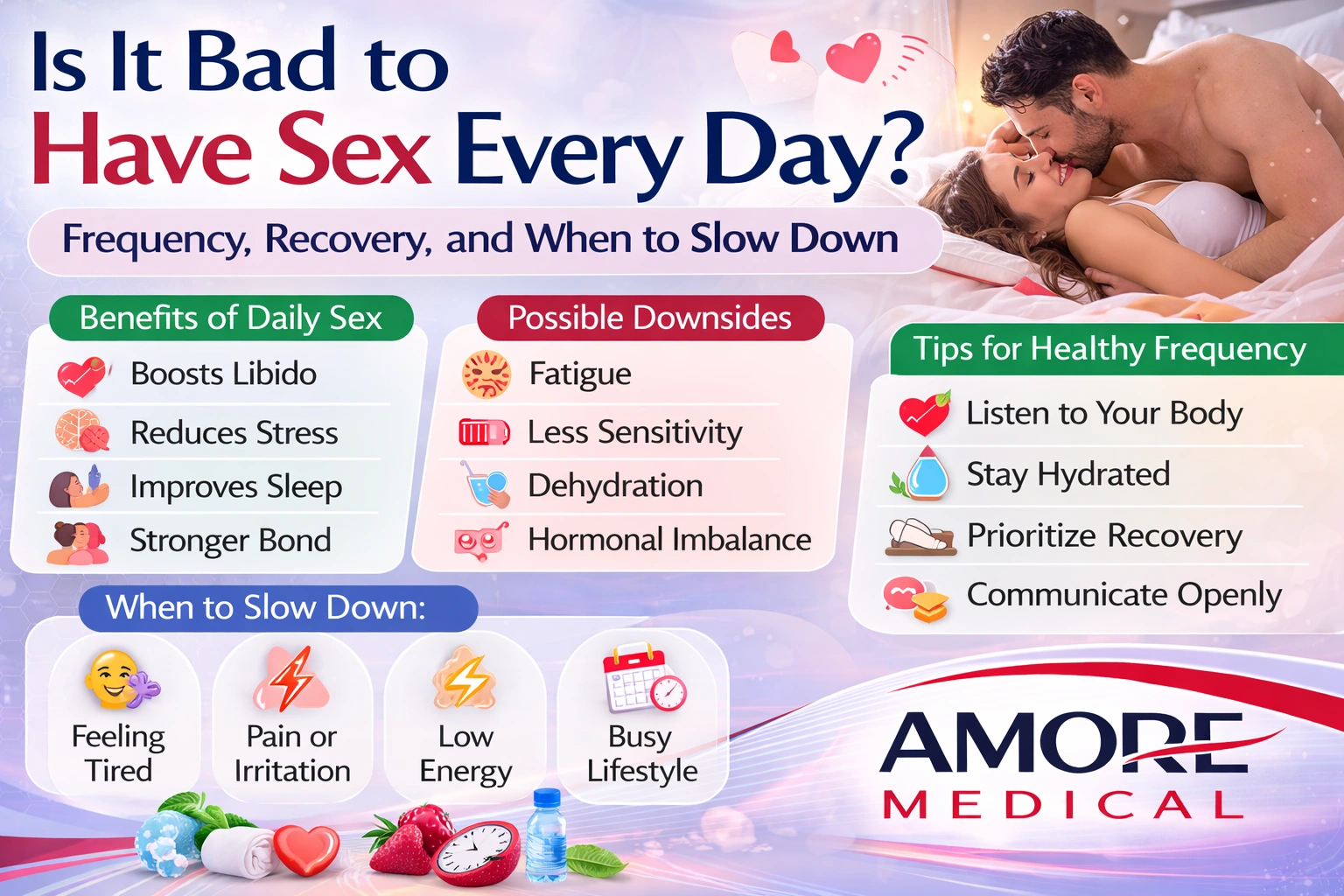
If you have ever wondered, is having sex every day bad, the most honest answer is that it depends far more on how your body feels, how your relationship is functioning, and whether sex is happening in a healthy, consensual, comfortable way than on the number itself. For some couples, daily sex feels natural, fun, and emotionally connecting. For others, it may leave one or both partners feeling sore, pressured, fatigued, or emotionally disconnected. Frequency alone does not tell the whole story.
That is an important message in sexual wellness, especially because people often compare their sex lives to what they imagine is “normal.” In reality, there is no universal rule for how often healthy couples should have sex. Some people are happiest with frequent intimacy. Others prefer a slower rhythm. Desire can also shift with age, stress, work, sleep, parenting, hormones, relationship dynamics, medications, and physical health. A satisfying sex life is not measured by a fixed quota. It is measured by whether intimacy feels good, safe, wanted, and sustainable.
In a modern intimate health conversation, the better question is not simply whether daily sex is “bad.” It is whether your current frequency supports pleasure, comfort, connection, and recovery. That is where the real answer lives.
There Is No Universal “Right” Number
One of the biggest myths about sex is that healthy people should want it all the time, or that a strong relationship should naturally lead to sex every day. That idea creates pressure, and pressure tends to make intimacy worse, not better. In real life, healthy sexual frequency varies widely. Some couples go through periods of daily sex and enjoy it. Others connect a few times a week, once a week, or less often and still feel deeply satisfied.
What matters is not whether your pattern looks impressive from the outside. What matters is whether it works for the two people involved. If both partners feel enthusiastic, comfortable, and connected, daily sex may be completely fine. If one person feels obligated, physically uncomfortable, or emotionally checked out, then the schedule is not helping, even if it looks frequent on paper.
That is why sexual wellness professionals tend to focus on quality, communication, and symptoms rather than chasing a number. Frequency should support intimacy, not become a performance metric.
When Sex Every Day Can Be Totally Fine
For many adults, having sex every day is not automatically harmful. If both partners want it, if the experience is physically comfortable, and if it is not creating stress or disrupting daily life in unhealthy ways, daily intimacy can simply be part of a satisfying relationship. Some couples naturally move through phases where desire is high and daily sex feels exciting and effortless. That can happen during the early stages of a relationship, during vacations, after stress lifts, or during periods of stronger emotional connection.
Daily sex may also feel easier when people are paying attention to basics that support comfort and recovery. Those basics include enough arousal before penetration, good lubrication when needed, varied types of intimacy, and a willingness to slow down if soreness starts to build. When these pieces are in place, the body often handles frequent sexual activity without a problem.
It is also worth remembering that sex does not have to mean the exact same activity every time. Intimacy can include kissing, oral sex, mutual masturbation, touching, toys, sensual massage, or shorter, gentler forms of connection. Couples who understand that flexibility often have an easier time staying connected without overtaxing the body.
Why Recovery Still Matters
Even when sex is enjoyable, recovery matters. The body is not a machine, and pleasure can turn into irritation if there is too much friction, too little lubrication, or not enough time for sensitive tissues to settle down. This is especially relevant when intercourse is vigorous, extended, or repeated multiple times in a short window.
For people with vulvas, frequent sex can sometimes lead to soreness, irritation, or a burning sensation if vaginal dryness or friction becomes part of the experience. For people with penises, repeated friction may contribute to tenderness, skin irritation, or reduced comfort the next day. In either case, discomfort is useful information. It is the body’s way of saying that something needs to be adjusted, whether that means more foreplay, more lubricant, gentler technique, a rest day, or evaluation for an underlying issue.
Recovery also includes emotional recovery. Not every couple wants the same pace every day. A pattern can become draining if one partner begins to feel expected to say yes, or if sex starts replacing other forms of closeness and communication. Physical readiness and emotional readiness both matter.
Signs Your Body May Need a Slower Pace
It may be time to slow down, take a break, or change your approach if you notice:
- persistent soreness or rawness after sex,
- burning, stinging, or irritation during penetration,
- vaginal dryness that is making sex less comfortable,
- penile skin irritation or tenderness,
- pelvic pain, cramping, or pain that lingers after sex,
- bleeding after sex that is new, recurring, or unexplained,
- pain with urination or urinary symptoms after sexual activity, or
- a growing sense of pressure, dread, or emotional fatigue around intimacy.
These are not signs that sex is bad. They are signs that your body and your relationship may benefit from a different rhythm or a closer look at what is causing the discomfort.
Friction, Lubrication, and Why Technique Matters
When people ask, is having sex every day bad, they often assume frequency is the main issue. In practice, technique is often just as important. Daily sex that includes enough arousal, communication, and lubrication may feel much better than occasional sex that is rushed and dry. Friction is one of the most common reasons frequent sex stops feeling good.
Natural lubrication varies from person to person and can change with stress, medication use, breastfeeding, perimenopause, menopause, dehydration, and how much arousal is actually happening before penetration. That means discomfort is not always a sign that sex is happening “too often.” Sometimes it is a sign that the body needs more preparation or support.
Using lubricant can be a practical, confidence-preserving choice, not a sign that something is wrong. Slowing down for more foreplay can also make a major difference. In sexual medicine, one of the most useful truths is that comfort and pleasure usually improve when people stop treating arousal like a shortcut.
Simple Ways to Reduce Irritation
If frequent sex has started to feel physically intense, a few adjustments can help:
- Spend more time on arousal before penetration.
- Use a body-safe lubricant if dryness or drag is part of the problem.
- Alternate sexual activities instead of relying on penetration every time.
- Choose positions that feel gentler and easier to control.
- Take a day off if tissues feel irritated rather than pushing through discomfort.
These changes may sound simple, but they often make intimacy more sustainable.
When Daily Sex May Not Be the Best Fit
There are situations where sex every day may not be the best idea, at least temporarily. That does not mean something is wrong with wanting frequent intimacy. It just means the body or the relationship may need a different pace right now.
For example, if someone is dealing with vaginal dryness, pelvic floor tension, vulvar pain, recurrent yeast infections, urinary tract irritation, or pain during sex, daily intercourse can intensify symptoms. If someone is struggling with erectile changes, delayed recovery, or genital skin irritation, pushing for daily performance may add stress and reduce pleasure. If either partner has low libido, emotional burnout, or unresolved tension in the relationship, daily sex can start to feel like a demand instead of a connection point.
In intimate wellness care, this is where self-awareness becomes more valuable than rules. Frequency should adapt to real circumstances. There are seasons when daily sex feels easy and seasons when it does not. Both can be normal.
Can Daily Sex Affect Desire Over Time?
Sometimes yes, but not in the same way for everyone. For some people, more sex fuels more desire. For others, daily sex can create a sense of pressure that dampens interest. Sexual desire is influenced by the brain as much as the body. If intimacy starts to feel repetitive, obligatory, or disconnected from genuine arousal, libido can dip even if attraction is still present.
This is one reason communication matters so much. A couple may technically be having a lot of sex while feeling less sexually connected than before. That sounds counterintuitive, but it happens. Quantity can rise while responsiveness falls. When that happens, the solution is often not “have more sex.” It is “have better conversations and more intentional intimacy.”
Checking in with each other can help prevent this. Ask what feels good lately, what pace feels sustainable, whether either partner wants more variety, and whether sex still feels playful rather than scheduled or pressured. These conversations protect both desire and trust.
Safer Sex Still Matters, Even in a Frequent Routine
Another practical point: frequent sex does not lower the importance of safer-sex habits. If pregnancy prevention or STI protection matters in your situation, frequency can increase the need for consistency, not reduce it. Condoms and other barrier methods are still important tools, especially with new or non-exclusive partners. They are part of sexual wellness, not an interruption to it.
For people who are sexually active often, it also helps to pay attention to symptoms that should not be ignored, such as unusual discharge, sores, pelvic pain, pain with urination, recurrent irritation, or bleeding after sex. These symptoms are not always caused by “too much sex.” Sometimes they point to infections, inflammation, hormonal changes, or other medical concerns that deserve evaluation.
What About Ejaculation, Erections, and “Performance” Recovery?
In men’s sexual health, recovery is not just about skin irritation or fatigue. It can also involve erection quality, ejaculation timing, and confidence. Some people notice no problem with daily sex. Others find that erections are less consistent when they feel tired, stressed, dehydrated, or mentally pressured to perform again before they feel fully ready.
That does not automatically mean something is wrong. It may simply mean the body needs rest, a different pace, or less pressure around performance. But if firmness has become consistently unreliable, if recovery feels unusually long, or if sex has started to create anxiety, it may be worth looking beyond frequency alone. Circulation, hormones, medication side effects, sleep, stress, and broader erectile health can all influence how sex feels from one day to the next.
This is especially relevant in a sexual wellness setting like Amore Medical, where intimacy concerns are approached as health concerns, not as something to feel embarrassed about. If daily sex is uncovering a pattern of inconsistent erections, low libido, discomfort, or reduced satisfaction, that pattern may be giving you useful information.
When to Talk to a Medical Provider
Most of the time, the answer to is having sex every day bad is not a hard yes or no. But there are times when symptoms deserve real medical attention instead of guesswork. You should consider talking to a provider if sex is repeatedly painful, if you are bleeding after sex, if you notice persistent dryness or genital irritation, if urinary symptoms keep showing up after intercourse, or if sexual problems are affecting your confidence or relationship.
In modern intimate wellness and sexual medicine, these signs are not treated as something you should simply “push through.” They are often the body’s way of signaling that a treatable issue may be present. Sometimes the cause is straightforward, such as friction, not enough lubrication, or a temporary irritation. Other times, the problem may be related to pelvic floor tension, hormone changes, vaginal or vulvar tissue sensitivity, erectile concerns, infection, inflammation, or stress that is beginning to affect the body’s response to intimacy.
That is why it helps to stop thinking of this question only in terms of frequency. Daily sex is not automatically harmful. But when symptoms start to repeat, intensify, or interfere with pleasure, the more useful question becomes whether your body is recovering well and whether there is an underlying issue that deserves proper care.
Signs It Is Time to Get Checked
In regenerative sexual health and relationship-centered intimacy care, certain symptoms deserve more than home remedies or trial and error. A medical conversation is worth having if you notice:
- pain during or after sex that keeps coming back,
- bleeding after intercourse, especially if it is new or unexplained,
- persistent vaginal dryness, burning, or irritation,
- pain with urination or urinary urgency after sex,
- unusual discharge, odor, or genital skin changes,
- difficulty getting or maintaining a firm erection,
- pelvic pain, pressure, or cramping that lingers, or
- anxiety around sex that is affecting desire, performance, or closeness.
Symptoms like these do not automatically mean something serious is wrong, but they do mean it is time to stop assuming the problem will fix itself. In sexual wellness care, early attention often makes treatment simpler and more effective.
What These Symptoms May Be Pointing To
One reason this conversation matters is that the same symptom can have several different explanations. Pain during sex, for example, may relate to inadequate arousal, vaginal dryness, pelvic floor dysfunction, vulvar sensitivity, or deeper pelvic conditions. Bleeding after sex can come from tissue irritation, dryness, cervical changes, infection, or other causes that should be evaluated instead of ignored. Recurrent burning or urinary discomfort after intercourse may reflect irritation for some people, but for others it may point to infection or inflammation.
In men’s intimate health, repeated difficulty with erections or reduced firmness may look like a frequency issue on the surface, but it can also be connected to circulation, stress, hormones, fatigue, or broader erectile health. In women’s sexual wellness, dryness, burning, and pain may be influenced by hormone changes, tissue quality, pelvic floor tension, or conditions that affect vulvovaginal comfort. In both cases, the value of a provider is not only treatment. It is clarity.
That clarity often changes the emotional experience too. Many people spend weeks or months blaming themselves, wondering if they are doing something wrong, or worrying that intimacy is becoming a relationship problem. A thoughtful evaluation can replace that uncertainty with a more practical understanding of what is happening.
Why Guessing Can Delay Relief
It is common for people to search online, try to self-diagnose, or assume the issue is “just from having too much sex.” Sometimes that explanation is incomplete. Friction may be part of the problem, but not the whole story. If symptoms keep returning even after slowing down, using lubrication, or changing technique, continuing to guess usually prolongs the cycle.
In an intimate medicine setting, providers look at the pattern of symptoms, when they started, whether they happen every time or only sometimes, and whether there are clues pointing toward hormones, pelvic health, erectile function, infection, tissue irritation, or performance-related stress. That broader lens is what helps people move from frustration into a plan.
When Symptoms Should Not Be Ignored
Some signs are especially worth taking seriously because they suggest the issue may go beyond simple soreness from frequent intimacy. Recurrent bleeding after sex, worsening pain, abnormal discharge, strong odor, genital lesions, and urinary symptoms that do not settle down are all reasons to stop relying on guesswork. In sexual medicine and women’s pelvic wellness, these symptoms are treated as meaningful clinical clues, not as inconveniences to tolerate.
The same is true when sex starts affecting emotional well-being. If you or your partner have begun to dread intimacy, feel pressure to perform, or avoid sexual contact because it has become uncomfortable or unpredictable, that matters. Sexual wellness is not only about anatomy. It is also about confidence, trust, desire, and the ability to feel comfortable in your body.
Questions to Ask Yourself Before Booking an Appointment
If you are unsure whether it is time to get evaluated, these questions can help:
- Has this symptom happened more than once?
- Is the discomfort getting worse, not better?
- Have home adjustments such as more lubrication or a slower pace not solved it?
- Is the issue beginning to affect my desire, confidence, or relationship?
- Do I feel uncertain enough that I would rather have a real answer than keep guessing?
If the answer to several of these is yes, that is often enough reason to schedule a conversation. In intimate health care, you do not need to wait until symptoms become severe before seeking help.
What a Sexual Wellness Evaluation May Cover
One reason people delay care is that they imagine the appointment will feel uncomfortable or overly complicated. In a high-quality sexual wellness, men’s health, or women’s intimate care setting, the goal is usually the opposite: to make the conversation practical, respectful, and focused on what you are experiencing. A provider may ask about when symptoms occur, whether sex is painful at the start or deeper during penetration, whether dryness or irritation is part of the pattern, whether erections have changed, and whether stress, medications, or hormone changes may be influencing desire or performance.
Depending on the concern, the evaluation may also include discussion of pelvic symptoms, urinary changes, arousal patterns, relationship context, and previous treatments you have already tried. This is often reassuring because it reframes the experience. Instead of asking, “Why is my body failing me?” the conversation becomes, “What is contributing to this, and what can we do next?”
Topics Worth Bringing Up Honestly
Patients often get more value from the visit when they speak openly about details that feel awkward but are actually clinically useful, including:
- how often symptoms happen,
- whether they are linked to penetration, orgasm, or recovery afterward,
- changes in lubrication, desire, or arousal,
- erection quality and consistency,
- any bleeding, discharge, odor, or urinary discomfort, and
- whether the issue is starting to create avoidance or anxiety around intimacy.
These details help providers in sexual medicine and intimate wellness narrow down likely causes and recommend the most relevant next steps. That may involve treatment, pelvic health support, hormone evaluation, sexual health testing, lifestyle changes, or a combination of approaches.
Why Early Support Often Leads to Better Outcomes
Many sexual health concerns become more frustrating when they are ignored. Pain can lead to anticipation and muscle tension. Erectile inconsistency can create performance anxiety. Dryness can make repeated intimacy feel more irritating, which then makes arousal harder the next time. This is one reason early support can be so helpful. It interrupts the cycle before the physical symptom turns into a larger emotional burden.
In relationship-centered care, that matters for both partners. When one person is uncomfortable or anxious, intimacy often changes for the couple as a whole. Getting answers early can protect not only physical comfort, but also closeness, trust, and confidence.
That is especially relevant when people are asking whether daily sex is “too much.” The real issue is often not the number of times sex is happening. It is whether the body is responding well, whether recovery feels normal, and whether symptoms are sending a message that should be taken seriously.
It is also reasonable to reach out if daily sex is shining a light on other issues such as low desire, trouble maintaining erections, orgasm difficulty, pelvic pain, or hormone-related symptoms. The goal is not to medicalize every fluctuation. It is to recognize when something has moved beyond a simple preference question and into a quality-of-life issue.
Questions Worth Asking Yourself
If you are trying to decide whether your current frequency is working, these questions can help:
- Do both of us genuinely want this pace?
- Does sex still feel pleasurable, or has it become uncomfortable?
- Are we using enough lubrication and arousal time?
- Do we feel emotionally connected, or mostly pressured to perform?
- Are there recurring symptoms that suggest we should get checked?
Those answers usually reveal more than the number of times you had sex this week.
The Better Standard: Sustainable, Comfortable, and Wanted
The healthiest way to think about sexual frequency is not to ask whether daily sex is impressive, excessive, or ideal. It is to ask whether it is sustainable, comfortable, and wanted by everyone involved. If it is, it may be completely fine. If it is causing pain, tension, or emotional disconnection, that is your sign to slow down, change the routine, or get support.
Good sexual health is not built on pressure. It is built on consent, communication, physical comfort, and flexibility. Some weeks, that may mean sex every day. Other weeks, it may mean rest, recovery, and different forms of closeness. Both can be healthy. The body’s response matters. So does the relationship’s response.
At Amore Medical, this is exactly how intimate wellness is approached: with practical guidance, evidence-based care, and respect for the fact that sexual health is personal. If frequency, recovery, erection quality, libido, or pain has become a source of uncertainty, the right next step is not to judge yourself. It is to pay attention to what your body is telling you and seek care when needed.
That is the most useful answer to the question. Daily sex is not automatically bad. Ignoring discomfort, pressure, or recurring symptoms is what causes the real problem.