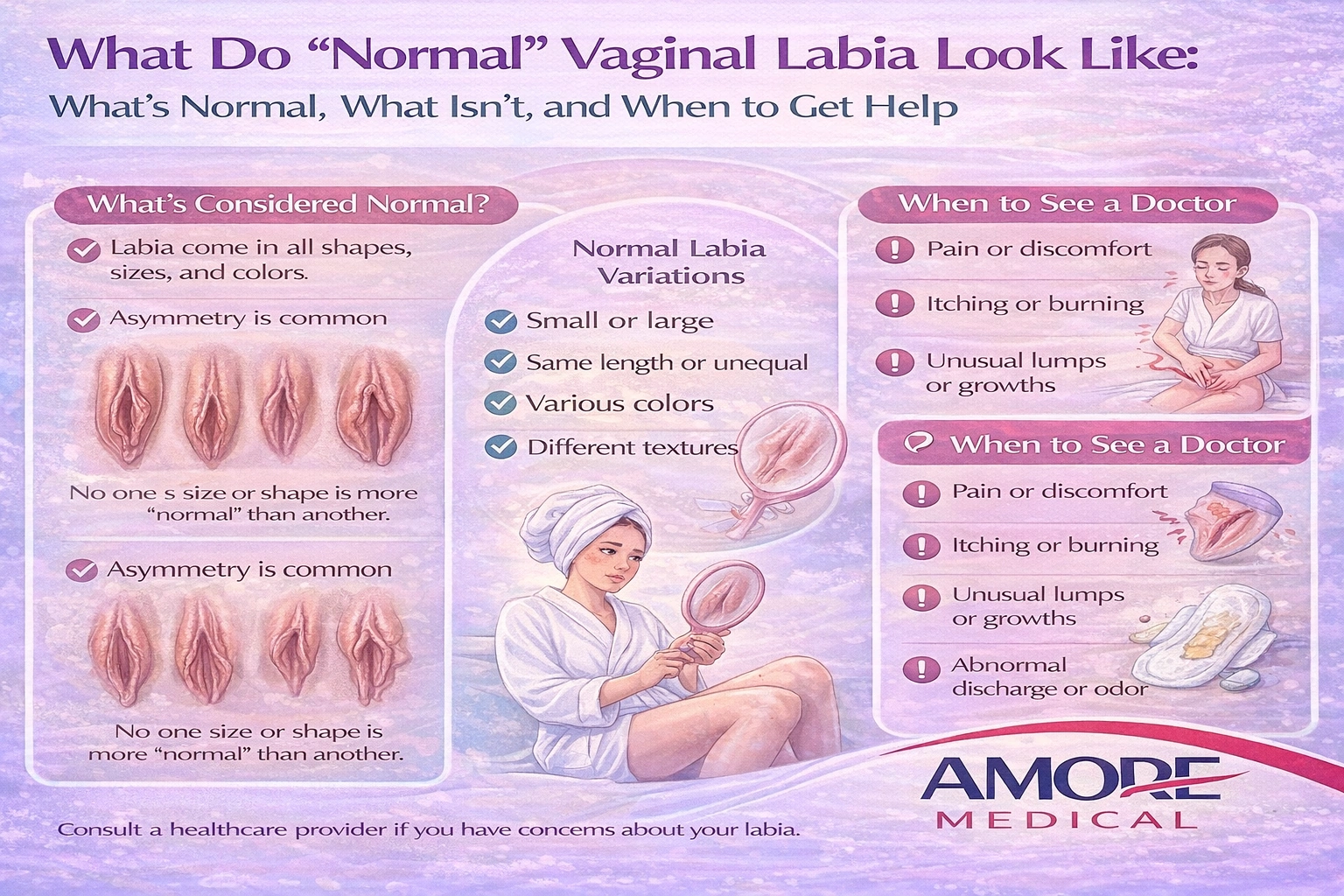
If you have ever looked at your body and wondered whether your labia are “normal,” you are far from alone. This is one of the most common questions people have about vulvar anatomy, and it often comes with a lot of unnecessary worry. Many people search phrases like what do normal vaginal labia look like because they want reassurance, clarity, and a better understanding of what healthy anatomy actually looks like. The truth is that there is no single correct way for labia to look.
That is the most important place to begin. Normal labia can vary widely in size, shape, color, symmetry, texture, and visibility. Some labia minora stay tucked inside the outer lips. Some extend beyond them. One side may be longer than the other. The color may be lighter, darker, pinker, redder, or browner than nearby skin. All of that can still be completely healthy.
At the same time, it is also helpful to know when a change is more than just normal variation. Persistent pain, itching, swelling, bleeding, a lump that does not go away, skin changes, or a sore that keeps returning are not things you have to ignore. Good sexual health education should do both: reassure you about what is common and help you recognize what deserves a closer look.
For a sexual wellness audience, this matters in a very practical way. The way people feel about their vulva can shape confidence, comfort during sex, willingness to communicate with a partner, and how quickly they seek help when something feels off. When people understand that normal anatomy is broader than they were taught, shame often loosens its grip. That can make intimacy, self-awareness, and health decisions much easier.
This guide takes a calm, practical look at the question what do normal vaginal labia look like. We will talk about what the labia are, why there is no one standard appearance, what kinds of variation are common, what symptoms are worth paying attention to, and when it makes sense to check in with a clinician. The goal is not to make you overanalyze your body. It is to help you understand it better.
First, the Labia Are Part of the Vulva, Not the Vagina
One reason this topic gets confusing is that people often say “vagina” when they really mean “vulva.” The vagina is the internal muscular canal inside the body. The vulva is the external genital area that includes the labia majora, labia minora, clitoris, clitoral hood, urethral opening, and vaginal opening.
So when people ask what normal vaginal labia look like, they are really asking about the vulva, especially the labia. This distinction is useful because most visible differences people notice are vulvar differences, not internal vaginal differences. Once that is clear, the conversation becomes much less mysterious and much more practical.
The labia themselves come in two sets. The labia majora are the outer folds of skin. The labia minora are the inner folds. Both can vary a great deal from person to person, and both can change over time with puberty, hormones, pregnancy, aging, and life stage.
There Is No Single “Normal” Look
The internet often makes genital anatomy seem like it should fit into a few neat categories. Real anatomy does not work that way. There are no official medical “types” of labia that bodies are supposed to match. Instead, there is a broad range of healthy variation.
Some people have fuller outer lips that cover most of the inner structures. Others have outer lips that are shorter or naturally parted, making the inner lips more visible. Some have slim inner labia. Others have thicker, more folded, or longer inner labia. Some vulvas look compact. Others have more prominent tissue. None of these patterns automatically means something is wrong.
This matters because many body image worries come from comparison, not from symptoms. People often compare themselves to edited images, pornography, stylized diagrams, or the limited anatomy they have seen elsewhere. But normal anatomy is much more varied than those narrow references suggest.
What Normal Labia Minora Can Look Like
The labia minora are one of the most common sources of concern because they vary so visibly. For some people, the inner lips are tucked well inside the labia majora. For others, the inner lips extend beyond the outer lips, sometimes noticeably. Both can be normal.
The inner labia may also differ in shape. They can be smooth, ruffled, thin, thicker, more folded, or slightly uneven. One side may hang lower or extend farther than the other. That asymmetry is very common and is often just a normal variant rather than a sign of disease.
Many people worry that longer or more visible inner labia mean something abnormal. In most cases, they do not. Labia minora naturally show marked variation in size and shape. Visibility alone is not a medical problem. What matters more is whether the tissue is comfortable for you and whether there are symptoms such as pain, rubbing, tearing, swelling, or recurrent irritation.
What Normal Labia Majora Can Look Like
The labia majora also vary a lot, although people often notice those differences less because the outer lips are not discussed as often. Some are fuller or fleshier. Some are flatter. Some cover most of the inner structures. Others sit farther apart or are less prominent. Puberty, body fat distribution, hormones, age, and genetics can all influence how they look.
Hair growth on the labia majora can vary too. Some people naturally have denser pubic hair, some lighter or sparser hair, and some notice changes with age or hormone shifts. None of this makes one body more normal than another. It is just human variation.
The skin of the outer labia also does not need to look perfectly smooth or airbrushed. Hair follicles, mild texture differences, and natural folds are all common. “Normal” skin in this area often looks more textured than people expect.
Asymmetry Is Common
One of the most reassuring facts about labia is that they do not need to be symmetrical to be healthy. In fact, one side being longer, thicker, or slightly shaped differently than the other is common. This is true for both the labia minora and labia majora.
Human bodies are not perfectly mirrored. Breasts differ. Feet differ. Ears differ. Labia can differ too. That kind of asymmetry is usually not a medical problem. It is part of normal anatomy.
What matters is whether the difference is stable and familiar or whether it is new and changing. A labia that has always looked a little different from the other side is very different from sudden swelling, a new lump, or one side becoming painfully enlarged over a short period of time.
Color Variation Is Usually Normal Too
Color is another area where people often worry unnecessarily. Many expect the vulva to match the surrounding skin on the thighs or lower abdomen. But genital skin commonly differs in color. The labia may be pink, reddish, brown, purple-toned, or darker than the nearby skin, and that can still be healthy and normal.
Some people also notice that one area of the vulva looks darker than another. The inner labia may be deeper in color than the outer lips. Hormones, blood flow, pregnancy, genetics, arousal, and age can all affect the appearance of vulvar tissue. The result is that there is a wide range of normal color variation.
Color changes that happen gradually over time and feel consistent with your normal anatomy are often not worrisome. What deserves more attention is a new patch, a persistent white area, a red raw spot, a dark raised lesion, or color change that comes with pain, itching, or thickened skin.
How Labia Can Change Over Time
Labia do not always look the same across every stage of life. Puberty changes genital tissue significantly. Hormonal shifts can change fullness, color, and sensitivity. Pregnancy often increases blood flow to the vulva and may change appearance. Childbirth, menopause, and lower estrogen can all affect skin texture and tissue volume as well.
That means your vulva at 14, 24, 44, and 64 may not look exactly the same. This is normal. Bodies change. In a healthy educational setting, those changes should be talked about openly so people do not mistake normal aging or hormone shifts for abnormal anatomy.
Some people also notice that the labia feel more sensitive, more fragile, or drier after menopause or during hormonal changes. This is not only about how the tissue looks. It can affect comfort, especially during sex, exercise, or wiping. If symptoms are present, that matters more than appearance alone.
When “Different” Is Still Normal
Many of the differences that trigger anxiety are actually harmless. These include:
- labia minora that extend past the labia majora,
- one inner lip longer than the other,
- darker genital skin,
- more folded or ruffled inner labia,
- smaller or flatter outer labia,
- changes in appearance with arousal, age, pregnancy, or hormones.
These are examples of normal variation. They may not match a mental image you picked up from the internet, but they can still be entirely healthy. This is why body education is so important. Once people understand the range of normal, they are less likely to see harmless differences as something they need to fix.
What Isn’t Just a Normal Variation
Reassurance is important, but so is honesty. Some changes deserve attention because they may point to irritation, infection, inflammation, skin disease, or something more serious. The most helpful question is not just, “Does this look different?” It is, “Does this look different and come with symptoms?”
Symptoms that should not simply be explained away as normal variation include:
- persistent itching,
- burning, soreness, or pain,
- swelling that does not improve,
- a lump or bump that grows or does not go away,
- a sore, blister, or ulcer,
- bleeding not related to your period,
- thickened skin, or red, white, or dark patches that are new,
- pain during sex or pain when peeing.
These symptoms do not always mean something serious, but they do mean it is worth moving beyond comparison and getting a proper evaluation. Conditions like yeast infections, contact dermatitis, vulvodynia, genital herpes, Bartholin cysts, skin disorders, and more serious vulvar disease can all cause symptoms that should not be ignored.
Labial Pain or Discomfort Is Worth Discussing
Sometimes the concern is not “Do my labia look normal?” but “Why do my labia feel uncomfortable?” This is an important difference. Even completely normal-looking labia can become painful from friction, infections, allergies, skin conditions, hormonal changes, or vulvodynia.
For example, if the area burns, stings, or feels raw, it may not be an anatomy issue at all. It may be irritation, a skin condition, or a chronic pain issue. If the tissue gets pinched or rubbed during exercise or sex, that can affect quality of life even if the anatomy itself is normal. In those situations, the question is not whether the body looks acceptable. The question is what is causing discomfort and how to address it.
This matters because people sometimes assume pain is just something they should tolerate or feel embarrassed about. They should not. Ongoing vulvar discomfort deserves attention.
When to Check In With a Clinician
It makes sense to check in with a healthcare professional when labial changes are clearly new, symptoms are persistent, or you simply are not sure what you are looking at. It is especially worth seeking care if you notice:
- a new lump, sore, or wart-like growth,
- itching that does not improve,
- pain, soreness, or tenderness,
- thickened or raised skin,
- red, white, or dark patches,
- bleeding from the vulva or blood-stained discharge not related to your period,
- burning when you pee.
These signs do not automatically mean something serious is wrong, but they are the kinds of symptoms clinicians want to know about. Many are treatable, and early attention is often the easiest path to relief.
Why This Matters for Sexual Wellness
Body confidence and sexual wellness are closely connected. If someone feels ashamed of how their labia look, they may avoid being seen, avoid certain positions, or stay tense during sex. That tension can interfere with pleasure just as much as a physical symptom can. On the other hand, when people understand that normal anatomy is broad and that their body does not have to resemble a narrow image to be healthy, intimacy often becomes less stressful.
This matters in intimate wellness care because confidence is not separate from physical health. A woman may come into a sexual medicine clinic thinking she has a problem with desire or comfort during intimacy, when part of the issue is actually anxiety about how her vulva looks. If she is constantly worrying that her labia are “too long,” “too dark,” “uneven,” or “different,” her body is less likely to relax. And when the body stays guarded, arousal, lubrication, and pleasure can all become harder to access.
That does not mean appearance concerns are “just in someone’s head.” It means the emotional experience of living in your body has a real effect on sexual function. In women’s wellness and men’s and women’s vitality care, this connection comes up often. People do not experience intimacy only through anatomy. They experience it through confidence, self-image, trust, and the ability to feel present during connection with a partner.
How Shame Can Affect Intimacy
When a person feels self-conscious about her labia, she may change her behavior in ways that directly affect sexual satisfaction. She may keep the lights off, avoid oral sex, avoid letting a partner look closely, or feel uncomfortable receiving touch in a relaxed way. None of that means she is disconnected from her partner. Often, it means she is carrying unnecessary worry about whether her body is acceptable.
In sexual wellness support, this is important because self-consciousness can look like low libido when it is really fear, distraction, or physical tension. A person may want closeness and still find it difficult to enjoy the moment because her attention keeps shifting back to appearance concerns. That can make intimacy feel more performative and less natural.
Some common ways shame may show up include:
- avoiding certain sexual positions,
- feeling uncomfortable with a partner seeing the vulva,
- staying physically tense during sex,
- pulling away from touch that would otherwise feel pleasurable,
- mistaking normal anatomy for a medical problem.
When those patterns are recognized for what they are, it becomes easier to approach them with compassion instead of embarrassment.
Normal Anatomy Supports Better Body Confidence
One of the most helpful things in sexual health education is learning that normal anatomy is not one narrow visual standard. Vulvar tissue naturally varies in size, shape, color, and symmetry. Once someone understands that, the pressure to “match” an unrealistic image often starts to loosen.
This is especially valuable in intimate health and hormone wellness settings, where the goal is not only to treat symptoms but also to help patients feel more comfortable in their own bodies. A better understanding of normal anatomy can reduce fear, improve communication, and create a more relaxed foundation for intimacy. When someone no longer sees normal labial variation as a flaw, she is often able to approach sex with more confidence and less guardedness.
That shift can improve more than appearance concerns alone. It can support:
- greater comfort during partnered intimacy,
- more openness in communication,
- less tension around being seen or touched,
- stronger trust in one’s own body,
- a healthier relationship with sexual confidence.
When Appearance Concerns Overlap With Physical Symptoms
It is also important to separate body image concerns from actual vulvar discomfort. Sometimes a person is worried about appearance when the tissue is healthy and symptom-free. Other times, she may be noticing irritation, swelling, pain, recurring itching, or friction that deserves real attention. That is where sexual medicine and women’s intimate care can be especially helpful.
If the concern is only “Does this look normal?” education may be the most important intervention. If the concern is “This hurts,” “This keeps swelling,” or “Sex has become uncomfortable,” then the conversation changes. In those situations, vulvar pain, hormonal changes, dryness, irritation, skin conditions, or infection may need evaluation. What matters is not ignoring either side of the issue. Appearance concerns deserve reassurance. Physical symptoms deserve care.
Signs It May Be More Than a Cosmetic Concern
While wide variation in labial appearance is normal, certain symptoms should not be brushed off as simple anatomy differences. It may be worth checking in with a clinician if there is:
- persistent pain, burning, or soreness,
- itching that keeps returning,
- a lump, cyst, sore, or wart-like lesion,
- swelling that does not improve,
- bleeding unrelated to the menstrual cycle,
- pain during sex, exercise, or friction from clothing.
In a modern sexual wellness practice, these are not “small” concerns. They can affect quality of life, confidence, and intimate comfort in very real ways.
At Amore Medical, sexual wellness is not only about hormones or performance. It is also about comfort, confidence, and understanding the body accurately. Better anatomy education often helps reduce unnecessary shame and makes it easier to notice when something truly needs care.
Final Thoughts
If you have been asking what do normal vaginal labia look like, the most accurate answer is that there is no one standard look. Normal labia can be long, short, tucked in, more visible, darker, lighter, symmetrical, or asymmetrical. Those differences are often just part of healthy human anatomy.
What matters most is not whether your labia match an unrealistic image. It is whether your anatomy feels familiar and comfortable for your body, and whether any changes come with symptoms like pain, itching, bleeding, sores, lumps, or skin changes that persist. When appearance differences are stable and symptom-free, they are often simply variation. When symptoms are present, they deserve more attention.
The best outcome of learning about normal labia is not memorizing a standard. It is feeling more at ease in your body and more confident about knowing when something is simply different and when something may need support. That kind of knowledge is a real part of sexual wellness.