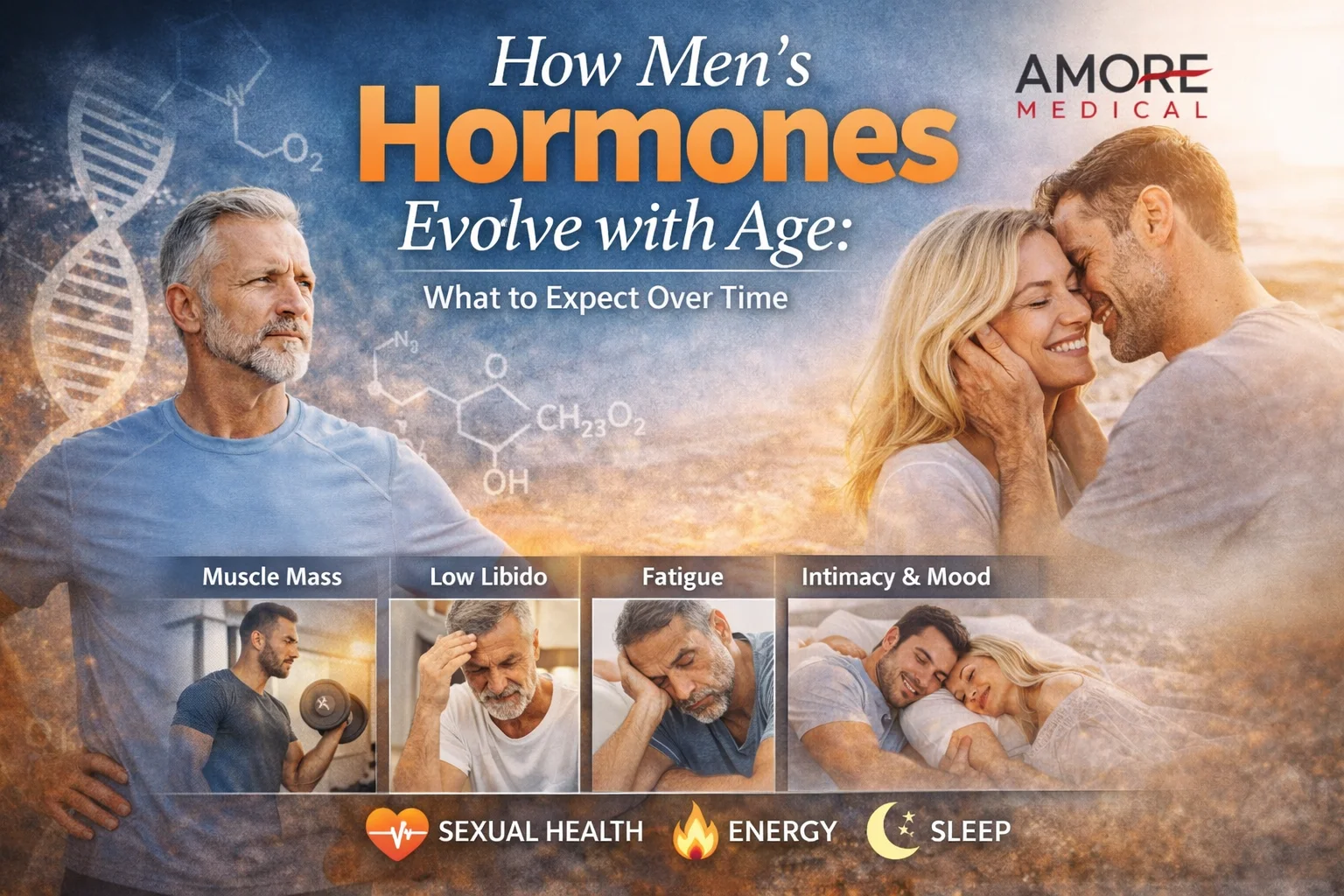
Many men notice changes over time that are easy to dismiss at first. Energy may not feel as steady as it once did. Recovery after exercise can seem slower. Sleep may become lighter, mood may feel less predictable, and interest in sex may shift in ways that are hard to explain. For some men, erections become less reliable or desire feels lower than it used to. These changes can feel personal, frustrating, and confusing, especially when they happen gradually. In many cases, hormones are part of the story.
Understanding how hormones change with age can help men make sense of what they are feeling without jumping to conclusions. Hormonal changes are common, but that does not mean every symptom should be ignored or accepted as inevitable. The body is always adapting, and hormone levels can influence far more than sexual function alone. They can affect metabolism, muscle mass, mood, focus, sleep quality, and overall confidence. In a sexual wellness setting, these shifts matter because they often overlap with libido, performance, intimacy, and self-image.
This is also why conversations around men’s hormone therapy have become more common. Men are no longer limited to simply waiting it out or assuming nothing can be done. The better approach is to understand what is normal, what may signal an imbalance, and when it makes sense to seek a professional evaluation. At Amore Medical, sexual health is viewed as a meaningful part of whole-body wellness. When hormone-related symptoms begin to interfere with daily life or relationships, compassionate and evidence-based care can make a real difference.
Hormones Do Not Stay Static Throughout Adult Life
Hormones help regulate many core functions in the body, and they naturally shift over time. In men, testosterone usually gets the most attention, and for good reason. It plays an important role in sex drive, erectile function, muscle maintenance, bone health, mood, and energy. But testosterone is not the only hormone that matters. Estrogen, cortisol, thyroid hormones, insulin, DHEA, and growth-related hormones also influence how a man feels and functions as he gets older.
The body does not move from normal to abnormal overnight. In most cases, hormonal changes happen gradually. A man may feel mostly fine in his thirties, begin noticing subtle changes in his forties, and then experience more obvious shifts in his fifties and sixties. That pattern is not the same for everyone. Genetics, stress, sleep, medications, alcohol use, weight changes, chronic illness, and activity level can all influence how strongly these hormonal changes are felt.
Because the process is gradual, many men adapt to symptoms without realizing how much has changed. They may assume fatigue is only from a busy schedule or believe lower desire is simply related to stress. Those factors do matter, but hormones can be part of the picture too. Looking at the whole story is what makes modern sexual wellness care, men’s health care, and hormone support more useful and more accurate.
Testosterone Usually Declines Gradually, Not All at Once
Testosterone is often described as the signature male hormone, but its role is broader than many people realize. It supports libido, helps preserve lean muscle, contributes to motivation, and influences mood and mental sharpness. It also plays a role in sexual performance, which is why changes in testosterone often come up in conversations about erectile concerns and reduced intimacy.
As men age, testosterone levels often decline slowly. This does not mean that every older man will have low testosterone, and it does not mean symptoms always stem from hormones alone. Still, a gradual drop can contribute to a noticeable shift in how a man feels physically and emotionally. What makes this especially frustrating is that the symptoms can be subtle at first. A man may not say, “I think my hormones changed.” He may simply say, “I do not feel like myself lately.”
That feeling matters. A lower sense of drive, reduced stamina, less interest in sex, increased body fat, declining strength, and lower confidence can all be tied to hormonal changes. For some men, the impact shows up most clearly in the bedroom. For others, it appears first in the gym, at work, or in overall mood. The specific symptoms vary, but the underlying issue is often the same: the body is not operating with the same hormonal support it once had.
Sex Drive and Sexual Performance Can Change for Different Reasons
One of the most common concerns men bring to a sexual wellness clinic is a change in libido or performance. This can be upsetting because it affects both private confidence and relationship dynamics. Hormones may play a role, but they are rarely the only factor. Blood flow, stress, sleep, cardiovascular health, emotional strain, medication side effects, and anxiety can all influence sexual function.
That is why it is important to look at sexual performance in a broader and more realistic way. In men’s intimate health, symptoms often overlap. A man may notice less desire, fewer spontaneous erections, difficulty maintaining firmness, or a sense that intimacy feels less natural than it once did. These experiences can happen together, but they do not always come from the same cause. In some cases, the issue is primarily hormonal. In others, it is more closely related to circulation, mental stress, aging-related changes in the body, or a combination of factors that build gradually over time.
For many men, this is where frustration begins. They may assume there should be one simple explanation, but sexual function depends on several systems working well at the same time. Hormones help drive desire and support overall vitality. Healthy blood flow supports erection quality. Emotional balance and confidence affect arousal and responsiveness. Even sleep quality can influence how the body performs. When one area is off, the effects can show up in ways that feel very personal and very immediate.
Changes in Libido and Changes in Erections Are Not Always the Same Thing
It helps to separate two concerns that are often grouped together: desire and performance. Libido refers to sexual interest or appetite. Erectile function refers more to the body’s physical response. A man can still feel mentally interested in sex but have trouble achieving or maintaining an erection. He can also experience the opposite pattern, where erections are physically possible but desire is lower than usual. In men’s wellness care, this distinction matters because it helps guide the next step in evaluation and treatment.
Lower libido is more often associated with issues such as hormone shifts, fatigue, chronic stress, depressed mood, relationship strain, or burnout. Erectile difficulties can be influenced by hormones as well, but they are often more closely tied to vascular health, nerve function, medication side effects, alcohol use, diabetes, or performance anxiety. The body does not separate these experiences as neatly as medical language does, which is why many men describe the issue more simply as, “Something feels off.” That description is valid, and it is usually the right place to begin.
Hormonal Changes Can Affect More Than Desire Alone
When hormone levels change with age, the effects are not limited to sex drive. Many men also notice reduced stamina, less motivation, slower recovery after exercise, and changes in mood or body composition. These shifts can indirectly affect intimacy by making a man feel less energetic, less confident, or less connected to his own body. In sexual wellness medicine, this matters because performance is rarely just a bedroom issue. It is often tied to how a man feels throughout the day.
If testosterone or other hormone levels are no longer supporting the body in the same way they once did, the signs may appear gradually. A man may not suddenly lose interest in sex overnight. Instead, he may start noticing that desire feels less spontaneous, arousal takes longer, and overall confidence is not as steady as it used to be. These changes can be subtle at first, but over time they may affect relationship satisfaction and self-image in meaningful ways.
Blood Flow Still Plays a Major Role
Even when hormones are part of the picture, blood flow remains one of the most important pieces of erectile health. An erection depends on healthy circulation, and that means cardiovascular wellness matters. Men sometimes focus on the sexual symptom without realizing it can reflect broader physical changes. Reduced firmness, shorter-lasting erections, or less reliable response may be related to circulation long before a more serious vascular problem becomes obvious in everyday life.
This is one reason modern men’s health care looks beyond a single symptom. Providers in sexual performance clinics and intimate wellness centers often consider whether erectile changes may be tied to blood vessel health, blood pressure concerns, metabolic changes, or lifestyle habits that affect circulation. That fuller perspective is useful because it helps avoid oversimplifying the issue. Better answers usually come from understanding the entire pattern, not just treating the most uncomfortable symptom in isolation.
Stress, Sleep, and Emotional Load Can Quietly Reshape Sexual Function
Stress has a powerful effect on sexual health, even when it is not immediately obvious. A man may be busy, mentally overloaded, sleeping poorly, and carrying a constant level of pressure that never fully turns off. In that state, the body often shifts into survival mode rather than connection mode. Desire may feel muted. Erections may become less consistent. Performance anxiety can begin after only one or two disappointing experiences, and once that cycle starts, it can reinforce itself.
Sleep problems can make this even worse. Poor sleep affects hormone balance, energy, mood, and recovery. It also lowers resilience, which means even small sexual concerns may start to feel larger and more emotionally charged. In men’s sexual wellness, providers often see that fatigue and stress do not just sit in the background. They directly shape libido, arousal, and confidence.
Emotional strain can also affect intimacy in ways that are easy to underestimate. Worry about performance, fear of disappointing a partner, or frustration about aging-related changes can make sexual experiences feel tense rather than natural. That tension can interfere with arousal, even when the underlying physical issue is mild. This is why a thoughtful men’s wellness approach includes attention to mindset, relationship context, and overall well-being along with any hormone or performance concerns.
Medication and Health Conditions Can Influence Performance
Another important piece of the conversation is medication use and general health. Some prescription medications may affect libido, erectile response, or orgasm. Chronic conditions such as diabetes, high blood pressure, obesity, and heart disease can also contribute to changes in sexual function. In many cases, these issues do not act alone. They overlap with age-related hormone shifts and create a more complex picture.
That complexity is exactly why personalized care matters. A man may come into a sexual health clinic thinking he needs one specific answer, only to learn that several manageable factors are contributing at once. That is not bad news. In many cases, it means there are multiple ways to support improvement when the evaluation is thorough and the treatment plan is individualized.
Muscle Mass, Body Composition, and Recovery Often Shift with Age
Another common sign of hormonal change is a shift in body composition. Men may notice that it becomes easier to gain fat, especially around the midsection, and harder to maintain muscle even with familiar exercise habits. Recovery after workouts may feel slower. Strength gains can plateau. The body may feel less responsive than it did before.
Hormones influence how the body builds and preserves muscle, how it stores fat, and how efficiently it uses energy. When testosterone gradually declines, the balance can shift in a way that makes body changes more noticeable. That does not mean these changes are irreversible, but it does mean they should not be ignored. Weight gain and muscle loss can affect not only appearance, but also confidence, metabolism, and long-term health.
For many men, these physical changes are emotionally significant. They do not just represent aging; they can represent a loss of control over the body. That is one reason why men’s hormone therapy is often part of a broader conversation about strength, vitality, and quality of life. When combined with lifestyle support, targeted treatment can help some men feel more physically capable and more like themselves again.
Mood, Focus, and Motivation Are Part of the Hormone Conversation Too
Hormonal changes are not just physical. They can affect emotional balance and mental performance as well. Some men report feeling more irritable, less resilient under stress, or less motivated than they were in earlier years. Others describe brain fog, reduced concentration, or a sense that their usual spark is missing. These symptoms may be brushed off as burnout or stress, but hormones can contribute.
This matters because mood and cognition are closely tied to sexual wellness. When a man feels mentally drained, emotionally flat, or disconnected from his own body, desire and intimacy can suffer. Confidence can fall, and performance anxiety can rise. In that way, hormonal changes can create a cycle: the body feels different, confidence drops, intimacy becomes strained, and the emotional weight of those changes makes symptoms feel even worse.
A good care plan looks beyond the surface complaint. If the main issue seems to be low libido, the right provider should still ask about stress, sleep, motivation, relationship changes, and energy. Sexual health rarely exists in isolation. When hormone-related symptoms are affecting several areas of life, a coordinated and medically guided plan can be far more effective than focusing on one symptom alone.
Sleep, Stress, and Lifestyle Can Magnify Hormonal Symptoms
Age-related hormone changes do not happen in a vacuum. Lifestyle can either soften the effects or make them much more noticeable. Poor sleep is one of the biggest examples. Men who are not sleeping well often report lower energy, less patience, worse recovery, reduced desire, and less stable mood. Chronic stress can raise cortisol and contribute to a body-wide sense of fatigue and imbalance. Weight gain, inactivity, and alcohol overuse can add even more strain.
In practical terms, this means a man may feel worse than his lab results alone would suggest. Two men with similar hormone levels can have very different symptom patterns depending on their sleep habits, activity level, stress load, and general health. That is one reason symptom-based care matters. Numbers are useful, but they do not tell the whole story.
For some men, improving sleep, exercise consistency, and nutrition can noticeably improve how they feel. For others, lifestyle changes help but do not fully resolve the issue. That is where evaluation for men’s hormone therapy may become more relevant. A quality clinic will not frame treatment as a shortcut. Instead, it should be part of a broader plan that respects both medical findings and day-to-day habits.
Why Men Often Wait Too Long to Seek Help
Many men delay care because the symptoms do not arrive in a dramatic way. Instead, they build slowly. What starts as mild fatigue becomes a daily drag on motivation. A few disappointing sexual experiences become a pattern. Extra weight becomes harder to lose. Sleep becomes less restorative. Over time, these small frustrations can add up to a larger sense that something has changed.
There is also the emotional side of it. Men are often used to pushing through discomfort, staying busy, and hoping symptoms improve on their own. When the issue involves sex drive, erectile function, or confidence, that hesitation can become even stronger. Some men worry the conversation will be awkward. Others assume the answer will be simplistic or dismissive. In a high-quality sexual wellness and restorative health setting, that should not be the case.
The truth is that seeking help early is often more productive than waiting until symptoms become more disruptive. Whether the issue turns out to be primarily hormonal, largely lifestyle-related, or a mix of both, clarity is usually the turning point. Once men understand what is happening, they can make decisions based on real information rather than frustration or guesswork.
When to Consider a Hormone Evaluation
Not every dip in energy or change in mood means something is wrong. Life is demanding, and temporary stress can mimic many hormone-related symptoms. Still, there are times when it makes sense to look deeper. If symptoms are persistent, worsening, or affecting intimacy, work, confidence, or overall well-being, a formal evaluation can be worthwhile.
Some of the signs that often lead men to seek answers include:
- Lower sex drive that does not seem temporary
- Erectile changes or reduced sexual performance
- Fatigue that persists even with rest
- Loss of muscle mass or increasing body fat
- Reduced motivation or lower mood
- Difficulty focusing or a sense of mental fog
- Less stamina, slower recovery, or reduced confidence
- Poor sleep or waking up feeling unrefreshed
These symptoms do not prove that hormone levels are low, but they do justify a closer look. A proper assessment should involve more than a quick conversation. It should consider symptoms, health history, lifestyle factors, and appropriate testing. In a sexual wellness practice, this kind of evaluation is especially important because hormone-related symptoms often overlap with erectile dysfunction, low desire, and relationship concerns.
What a Better Evaluation Looks Like
In a high-quality sexual wellness setting, the goal is not to guess. It is to understand. A useful evaluation looks at symptoms in context, including desire, erection quality, energy, sleep, stress, mood, medical history, and lifestyle patterns. Instead of assuming that every symptom points directly to low testosterone, a strong provider asks how all of these pieces fit together.
That process often includes attention to concerns such as:
- Whether desire has decreased, performance has changed, or both
- How long symptoms have been present and whether they are getting worse
- Whether fatigue, weight gain, mood changes, or poor sleep are also present
- How medications, alcohol use, and chronic health conditions may be contributing
- Whether anxiety or relationship stress is affecting confidence and arousal
When men receive care through a personalized sexual health clinic, they are more likely to get a plan that reflects their actual needs rather than a generic assumption. Some men may need support for hormone imbalance. Others may benefit from treatment focused on circulation, lifestyle changes, or performance-related stress. Many do best with a combination of strategies designed to improve both physical response and overall well-being.
At Amore Medical, Treatment Is Personalized and Rooted in BHRT
At Amore Medical in Orlando, we focus on Bio-Identical Hormone Replacement Therapy, often called BHRT. This form of hormone support uses hormones designed to match the structure of the hormones your body naturally makes. In a modern sexual wellness and men’s health setting, that matters because treatment is not based on guesswork or a one-size-fits-all formula. It begins with understanding what is changing in your body and how those changes are affecting the way you feel, function, and experience intimacy.
Treatment begins with a thorough medical evaluation and lab testing to identify imbalances. Instead of assuming every symptom is simply caused by aging, the goal is to determine whether a measurable hormone shift may be contributing to concerns such as fatigue, brain fog, weight changes, low libido, mood swings, poor sleep, or reduced overall vitality. For many men, that level of clarity is the first meaningful step toward feeling better.
Based on your results and symptoms, we create a personalized plan that may help reduce common concerns such as fatigue, brain fog, weight changes, low libido, mood swings, and poor sleep so you can feel more balanced and like yourself again. That individualized approach is especially important in men’s wellness medicine because no two patients present in exactly the same way. One man may be most affected by low energy and reduced motivation. Another may be more concerned about intimacy, performance, or declining confidence. A tailored BHRT plan allows treatment to reflect the patient rather than forcing the patient into a generic protocol.
Why a Personalized Hormone Plan Matters
Hormone-related symptoms can show up in ways that affect daily life well beyond the bedroom. Many men first notice that they are more tired than usual, less mentally sharp, or slower to recover physically. Others become aware of changes in libido, mood, or sleep quality before they connect those symptoms to hormones. In sexual wellness medicine, these concerns are taken seriously because they often overlap. Energy, confidence, desire, and performance are not separate issues. They influence each other in real life.
With BHRT, the purpose is not to promise unrealistic results or position treatment as a shortcut. The purpose is to support balance when testing and symptoms suggest that hormone optimization may be appropriate. In a men’s sexual health and intimate wellness setting, that can mean helping patients address concerns such as persistent fatigue, poor concentration, lower sex drive, unwanted body composition changes, mood instability, and reduced resilience. A more proactive approach gives patients the opportunity to understand what is happening before those changes begin to affect relationships, confidence, and quality of life more significantly.
BHRT as Part of a Broader Sexual Wellness Strategy
In restorative medicine and performance wellness care, hormone treatment works best when it is part of a broader view of health. Hormones are important, but so are sleep, stress, circulation, nutrition, physical activity, and emotional well-being. At Amore Medical, BHRT is approached as one part of personalized care designed to help patients feel more balanced, more energized, and more connected to themselves again. For the right candidate, treatment may help reduce symptoms and improve day-to-day function in a meaningful, medically guided way.
That patient-centered model is especially valuable in a concierge-style sexual wellness environment, where privacy, comfort, and trust matter. When men feel heard and evaluated thoroughly, they are more likely to move forward with clarity instead of confusion. Rather than simply accepting hormone-related symptoms as part of getting older, they can explore whether evidence-based treatment may help restore a stronger sense of well-being.
What Men’s Hormone Therapy Is Really About
Men’s hormone therapy is often misunderstood. Some people view it as a performance shortcut or a cosmetic fix. In reality, its proper role is much more grounded. The purpose is to help men with clinically meaningful symptoms and confirmed imbalances restore a healthier sense of function and well-being under medical supervision.
When used appropriately, hormone replacement therapy for men may be part of a plan to address low testosterone and related symptoms. It is not about creating unrealistic results or turning back time. It is about supporting the body when hormone levels and symptoms suggest that additional help may be appropriate. For some men, treatment can improve libido, energy, mood, muscle maintenance, and overall vitality. For others, the better course may be a different treatment path entirely.
The key is personalization. Men do not all age the same way, and they do not all respond to treatment the same way. A thoughtful clinic approach should focus on safety, monitoring, symptom tracking, and realistic goals. It should also recognize that sexual wellness includes more than hormone levels alone. Blood flow, emotional health, physical health, and relationship context all matter.
What Improvement May Look Like Over Time
Men often want to know what to expect once they begin addressing a hormone imbalance. The honest answer is that improvement does not usually happen in a single moment. It tends to build. Energy may begin to feel steadier. Sleep may become more restorative. Mental clarity may improve. Desire may feel more natural. Confidence may return gradually as the body begins responding in a more supportive way.
That slower, realistic progression is important. A trustworthy sexual wellness clinic should set expectations clearly and follow progress carefully. Hormone care works best when it is monitored, adjusted when needed, and viewed as part of an overall health strategy. The goal is not simply to change a number on a lab report. The goal is to help the patient feel better in a real and sustainable way.
For many men, one of the most meaningful changes is not just physical. It is the return of self-trust. When fatigue starts to lift, when motivation feels more natural, when intimacy feels less stressful, and when the body begins to feel more responsive again, daily life changes too. That is often why men describe successful treatment not as something dramatic, but as feeling more like themselves again.
Why Personalized Sexual Wellness Care Matters
Men often wait too long to bring up hormone or sexual health concerns. Some feel embarrassed. Others assume symptoms are simply part of getting older and that nothing can be done. But silence often leads to more frustration, not less. When symptoms are affecting confidence, intimacy, or day-to-day quality of life, getting answers can be a turning point.
At Amore Medical, personalized care means taking symptoms seriously without rushing to generic solutions. Men deserve an approach that is discreet, respectful, and based on real clinical reasoning. Whether the issue involves libido, hormone imbalance, erectile concerns, or a broader sense of reduced vitality, the goal is to understand the full picture and create a plan that fits the patient rather than the other way around.
That matters because sexual health is deeply personal. It affects relationships, self-esteem, and the way many men experience their overall well-being. A supportive medical setting can make these conversations easier and more productive. Instead of guessing, men can get clarity. Instead of feeling dismissed, they can get answers and options.
What to Expect Over Time
The most important thing to understand is that change does not automatically mean decline without hope. Men’s hormones do evolve with age, and some degree of change is normal. But normal does not mean irrelevant, and it does not mean men have to accept feeling unlike themselves if help is available. The better view is this: aging brings shifts, and those shifts deserve attention when they begin to affect health, intimacy, or quality of life.
For some men, the right next step is improving sleep, exercise, nutrition, and stress management. For others, a medical evaluation may reveal that men’s hormone therapy should be part of the conversation. The value is not in assuming one solution fits everyone. The value is in understanding what is happening and responding with informed, personalized care.
If you have noticed changes in libido, energy, mood, body composition, or performance, it may be time to stop wondering and start getting answers. A professional evaluation can help clarify whether hormones are part of the issue and what options may make sense for you. With the right support, many men find that aging does not have to mean settling for less confidence, less connection, or less vitality than they deserve.