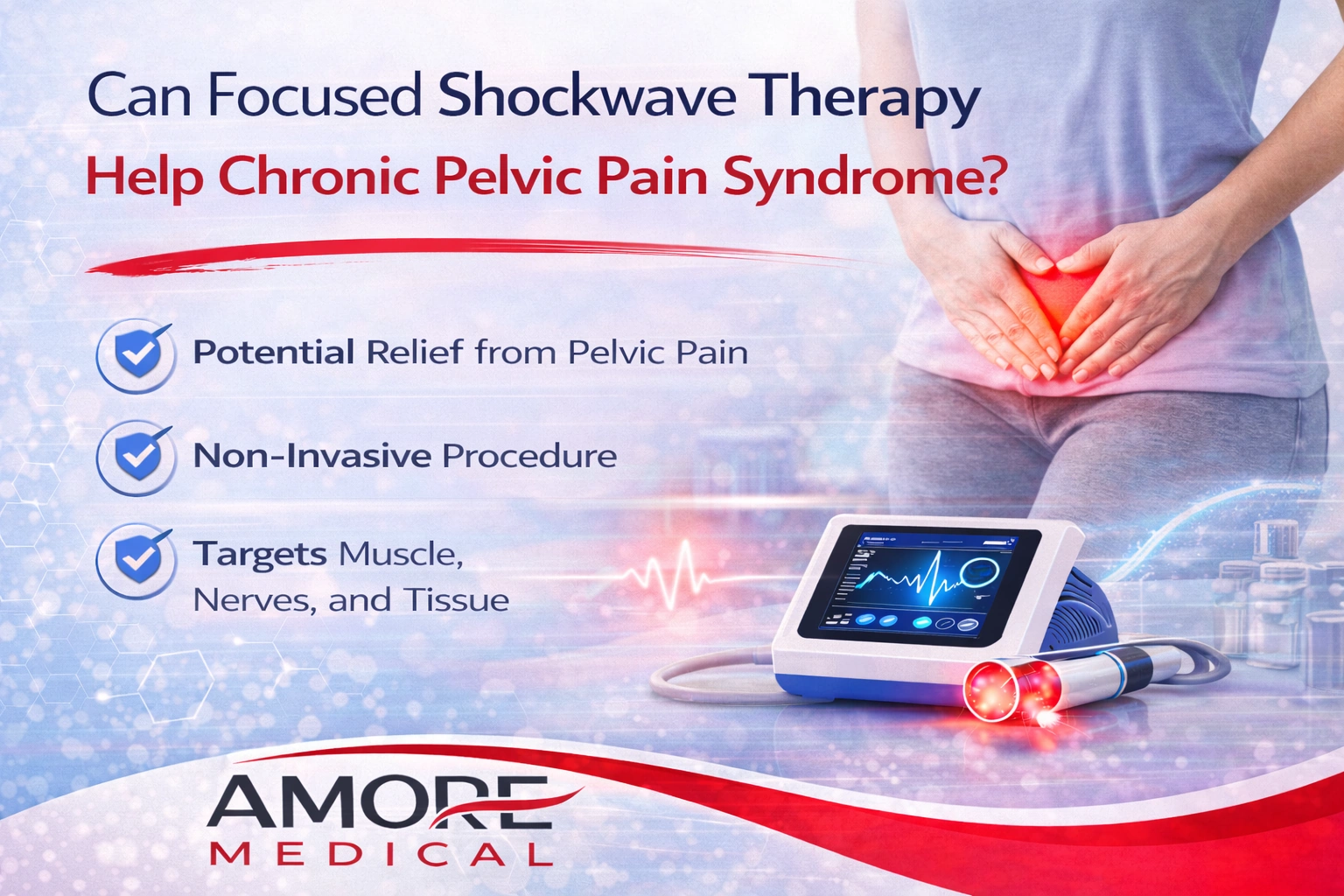
Chronic pelvic pain syndrome can be one of the most frustrating conditions in sexual and urologic health because it often affects far more than one body part. Patients may describe pressure, aching, burning, pain with sitting, discomfort after ejaculation, urinary urgency, or the feeling that the pelvis never fully relaxes. Some have seen multiple providers, taken antibiotics that did not help, or started wondering whether the pain is “just stress” because no one has clearly explained what is happening. That uncertainty can be exhausting.
If you have been searching for answers, you may also have come across focused shockwave therapy for chronic pelvic pain syndrome. It is a topic that has gained real attention because chronic pelvic pain syndrome, often shortened to CPPS, can be persistent, difficult to treat, and closely tied to quality of life. Patients want to know whether there is a non-invasive option that may help reduce pain, improve comfort, and support intimacy without moving directly into more aggressive interventions.
The most useful answer is that focused shockwave therapy may help some patients with chronic pelvic pain syndrome, but it should be understood as part of a broader treatment conversation rather than as a one-size-fits-all cure. The strongest current evidence suggests that extracorporeal shockwave therapy can improve pain and symptom scores in many men with chronic prostatitis/chronic pelvic pain syndrome, though protocols still vary and long-term data continue to develop. That means the treatment is promising, clinically relevant, and worth discussing—especially in the right patient—but it still belongs inside a thoughtful evaluation and a personalized care plan.
At Amore Medical, sexual wellness is approached with the understanding that comfort, confidence, and intimacy are deeply connected. Pelvic pain can affect erections, desire, relationships, body confidence, and the ability to stay relaxed during sex. This article explains what chronic pelvic pain syndrome is, why it can be so disruptive, how focused shockwave therapy fits into current treatment thinking, who may be a reasonable candidate, and what patients should know before starting treatment.
What Chronic Pelvic Pain Syndrome Actually Means
Chronic pelvic pain syndrome is a broad term, and that is part of why it feels confusing. In men, it is often discussed as chronic prostatitis/chronic pelvic pain syndrome, or CP/CPPS. Despite the older prostatitis language, many patients do not have a bacterial infection. Instead, they have pelvic or genital pain and related urinary or sexual symptoms that last or recur over time. NIDDK describes the main symptoms of chronic prostatitis/chronic pelvic pain syndrome as pain or discomfort lasting three months or more in areas such as the perineum, lower abdomen, penis, testicles, or lower back, often with urinary symptoms and sometimes painful ejaculation.
That symptom pattern is important because CPPS is rarely just “prostate pain.” It may involve pelvic floor muscle tension, nerve sensitivity, bladder-related symptoms, sexual discomfort, or a chronic pain cycle that becomes self-reinforcing. Some patients feel a deep aching pressure. Others feel burning, sharp discomfort, pain after sex, or pain that gets worse with sitting. Some mainly notice urinary urgency and pelvic heaviness. Others feel the impact most during intimacy.
In other words, CPPS is often less about one isolated organ and more about a pain pattern affecting the pelvic region as a whole. That is one reason a broader treatment approach usually works better than looking for a single medication that fixes everything.
Why CPPS Can Be So Disruptive to Sexual Wellness
Pelvic pain does not stay neatly contained in one category of life. It changes how the body feels during ordinary movement, how the nervous system reacts to stress, and how intimacy feels emotionally and physically. A man with CPPS may avoid sex because ejaculation triggers pain. He may tense up before intimacy because he is worried about what his pelvis will do. He may notice erectile changes that are not only about blood flow, but about discomfort, guarding, and fear of provoking symptoms.
This is why chronic pelvic pain syndrome belongs in a sexual wellness conversation. Patients often assume they should treat pelvic pain separately from sexual function, but in real life the two are closely linked. Ongoing pain can reduce libido, make arousal feel less accessible, create performance anxiety, and lead to more pelvic floor guarding. That guarding can then worsen pain, which creates a frustrating loop.
At Amore Medical, this whole-body view matters. The goal is not only to ask where the pain is. It is also to ask how the pain is affecting comfort, confidence, erectile function, arousal, and quality of life. When those pieces are acknowledged together, treatment tends to become more targeted and more compassionate.
Why Treatment for CPPS Often Needs to Be Multimodal
One of the biggest mistakes in chronic pelvic pain care is expecting one treatment to do everything. CPPS often behaves like a layered condition. Muscle tension may be part of it. Nerve sensitization may be part of it. Bladder symptoms may be part of it. Sexual stress and fear of pain may be part of it. In some patients, circulation or inflammation may also play a role. That is why many guidelines now support multimodal care rather than single-track treatment.
The EAU chronic pelvic pain guideline emphasizes pelvic floor relaxation, specialized physiotherapy, psychological support, and other non-surgical strategies as parts of care, and the 2025 AUA male chronic pelvic pain materials include extracorporeal shockwave therapy among treatment options with moderate evidence. These positions are useful because they reflect how CPPS is treated in practice: not as one simple infection, but as a syndrome that may require several coordinated tools.
This is exactly where focused shockwave therapy becomes relevant. It is not interesting because it replaces every other treatment. It is interesting because it may become one part of a broader plan for selected patients—especially those looking for a non-invasive option that may help reduce symptoms and improve comfort.
What Focused Shockwave Therapy Is
Focused shockwave therapy uses targeted acoustic energy delivered to tissue in a controlled clinical setting. In the urology and sexual medicine world, the technology is discussed not only for vascular erectile dysfunction, but also for chronic pelvic pain syndrome. STORZ describes the DUOLITH SD1 T-TOP ultra URO as a focused shock wave system used for urological indications including CPPS, ED, and painful penile curvature, and it specifically presents the technology as a non-invasive approach.
That non-invasive aspect matters because many patients with pelvic pain have already had enough discomfort, enough medication trials, or enough failed reassurance. They want to know whether there is an option that does not involve surgery and does not require a major recovery period. Focused shockwave therapy enters the conversation there.
In practical terms, the treatment is usually delivered in a series of office visits. The exact protocol can vary by clinic and by device, which is one reason patients should always ask how their provider structures treatment and why.
What the Current Evidence Suggests
When patients hear about shockwave therapy, they usually want to know one thing first: does it actually help? The current evidence suggests that extracorporeal shockwave therapy may improve symptoms in many patients with chronic prostatitis/chronic pelvic pain syndrome, especially pain and quality-of-life measures. A 2024 systematic review and meta-analysis found that men with CP/CPPS who received shockwave therapy had more pronounced pain relief and better improvement in NIH-CPSI symptom scores compared with placebo or medication-only control groups, with benefits that appeared to persist at six months in the analyzed studies. A 2026 systematic review similarly concluded that ESWT appears safe and effective for CPPS, while also noting that larger randomized trials with longer follow-up are still needed.
That is a meaningful signal. It suggests this is not simply a trend topic without evidence. At the same time, it is still important to stay measured. Research protocols vary, session counts vary, and patient populations differ from one study to another. That means the treatment should be discussed as promising and evidence-supported, but not as a guaranteed answer for every patient with pelvic pain.
For many patients, that balanced explanation is actually reassuring. It means the treatment is being offered thoughtfully, not sold carelessly.
Who May Be a Reasonable Candidate
Good candidacy is about pattern, not just interest. A patient who may be a reasonable candidate for focused shockwave therapy for chronic pelvic pain syndrome often has persistent pelvic pain symptoms that have not fully responded to simpler measures and that still fit a CPPS pattern after appropriate evaluation. That may include pelvic, perineal, genital, or ejaculatory pain, urinary discomfort, pelvic pressure, or quality-of-life disruption that continues despite more basic treatment attempts.
Reasonable candidates often share some of these features:
- pelvic or genital pain lasting at least several months,
- a symptom pattern consistent with chronic pelvic pain syndrome rather than acute infection,
- significant impact on daily comfort, sexual function, or emotional well-being,
- interest in a non-invasive treatment option,
- willingness to view treatment as part of a broader plan rather than a single magic fix.
This does not mean everyone who matches those points should automatically start treatment. It means those are the kinds of patients for whom a focused shockwave discussion may be clinically reasonable. The actual decision still depends on evaluation, symptom history, and whether other important causes of pelvic pain have been considered.
Who May Need a Different First Step
Just as with sexual dysfunction treatments, not every patient with pelvic pain should move immediately to shockwave therapy. Some need a different first step. If symptoms strongly suggest acute infection, blood in the urine, a new and severe urinary problem, a stone, a hernia, neurologic symptoms, or another structural issue, those concerns need proper evaluation first. Similarly, if pelvic floor muscle dysfunction is clearly dominant, specialized pelvic floor physical therapy may need to be part of the front end of care rather than added only later. The EAU guideline places real emphasis on pelvic floor relaxation and specialized physiotherapy in chronic pelvic pain care.
In other cases, the pain picture may be strongly shaped by stress, nervous system sensitization, or emotional strain that has built up over time. That does not mean the pain is “psychological.” It means chronic pain often becomes more entrenched when the nervous system stays on high alert. In that setting, behavioral support, stress reduction, and pain-informed therapy may matter just as much as any device-based treatment.
This is one reason Amore Medical’s broader sexual wellness model matters. Pelvic pain often needs a treatment plan, not just a treatment product.
What Treatment at a Clinic Usually Looks Like
Patients are often relieved to learn that focused shockwave therapy is generally an office-based treatment rather than a surgical procedure. A session is usually brief, and the treatment is performed directly on the patient without the kind of recovery period people often associate with interventions in the pelvic region. STORZ specifically describes the DUOLITH platform as allowing treatment directly on the patient, with a focused handpiece and adjustable energy settings.
That does not mean the process should feel casual or generic. A good clinic should explain what areas are being treated, how many sessions are recommended, what the schedule looks like, and how progress will be assessed. Because protocols vary in the literature, patients should feel comfortable asking why a certain number of sessions is being recommended in their case.
Another useful expectation is that symptom change may be gradual. As with many chronic pain treatments, improvement is often measured over a course of care rather than after a single appointment. Patients do better when they understand that from the beginning.
What Patients Often Want to Know Before Starting
Most patients considering focused shockwave therapy for CPPS ask very practical questions. They want to know whether the treatment is painful, whether it is safe, whether it may help sex become less painful or less stressful, and whether it can be combined with other treatments. Those are the right questions to ask.
Helpful questions include:
- Does my symptom pattern fit chronic pelvic pain syndrome?
- What other causes of pelvic pain should be ruled out first?
- How many sessions do you usually recommend, and why?
- What kind of improvement is realistic for someone like me?
- Should this be combined with pelvic floor therapy, medication, or other support?
- How will we measure progress?
A trustworthy clinic should be able to answer those clearly. In pelvic pain care, confidence often comes from understanding the plan, not just from hoping something will work.
How This Fits Into Sexual Wellness at Amore Medical
At Amore Medical, pelvic pain is not viewed as separate from intimate wellness. Chronic pelvic pain can influence erections, libido, arousal, orgasm, comfort, confidence, and emotional closeness. That means treatment should not focus only on the pain score. It should also ask whether the patient feels safer, more relaxed, and more capable of enjoying intimacy as symptoms improve.
This is one reason focused shockwave therapy can be a meaningful option in the right patient. It offers a non-invasive tool that may help reduce symptoms while fitting into a broader model of private, personalized sexual wellness care. The point is not to replace every other therapy. It is to expand what is possible for patients who want a thoughtful, modern, non-surgical approach.
When CPPS is affecting both pelvic comfort and sexual function, a care plan that recognizes both sides of the problem usually feels much more useful than one that treats them as separate issues. That is part of what makes integrated intimate health care different.
Why Realistic Expectations Matter
One of the best things a patient can hear is that a treatment is promising without being portrayed as perfect. Focused shockwave therapy appears to be a legitimate option for many CPPS patients, and the evidence suggests it can improve pain and quality-of-life outcomes. But chronic pelvic pain is often complex. It may take more than one treatment strategy, and not every patient will respond in the same way or at the same pace.
That kind of honesty is not discouraging. It is actually what makes good care feel credible. Patients are better able to commit to treatment when they understand that the goal is meaningful improvement, not instant perfection. In chronic pain care, even moderate improvement can make an enormous difference in sleep, stress, sexual confidence, and daily life.
For many people, that is exactly what they are hoping for: not a miracle, but a treatment path that finally feels sensible, respectful, and possible.