Curiosity about desire is normal, and that is one reason so many people search for sexual kinks for beginners. They want clear, nonjudgmental information that explains what kinks are, why people explore them, and how to approach them in a way that feels safe, respectful, and grounded. Unfortunately, a lot of content on this topic either turns it into shock value or skips the most important part: consent.
A better approach starts with a simple truth. Kinks are not automatically dangerous, shameful, or a sign that something is wrong. In many cases, they are simply one part of how adults experience attraction, fantasy, pleasure, power, novelty, or emotional connection. What matters most is not whether a person has a kink. What matters is how they communicate, how they respect boundaries, and how they make sure everyone involved feels informed and comfortable.
This beginner-friendly guide is designed to offer practical, trust-building sexual education. It explains what kinks are, how they differ from general preferences, why consent is the foundation of any healthy exploration, and what beginners should know before acting on curiosity. The goal is not to pressure anyone into trying anything. The goal is to help people feel more informed, less embarrassed, and more confident talking about desire in a mature, respectful way.
What Is a Sexual Kink?
In simple terms, a sexual kink is an interest, theme, dynamic, or type of stimulation that falls outside what someone personally thinks of as “standard” sexual activity. That definition is broad on purpose. What feels ordinary to one person may feel adventurous to another. Cultural background, personal experience, relationship history, and comfort level all shape how people define kink.
That is why it helps to think of kink as a spectrum rather than a single category. For some people, kink might mean mild role-play, power dynamics, or specific fantasies. For others, it may involve structured rules, rituals, or shared scenes with carefully negotiated boundaries. The label itself is less important than the context. A healthy kink experience is based on consent, clarity, and mutual respect.
It is also worth saying that fantasy and real-life interest are not always the same. A person may enjoy thinking about a certain scenario without wanting to try it in real life. That is normal. Desire is complex, and not every thought needs to become an action. Good sexual education makes room for that difference instead of treating every fantasy like a plan.
Why People Explore Kinks
People explore kinks for many different reasons, and not all of them are purely physical. For some, kink offers novelty and excitement. For others, it creates a stronger sense of trust, vulnerability, or closeness with a partner. Some people enjoy the psychological side of anticipation, structure, permission, or role reversal. Others like the way a certain dynamic helps them feel more present in their body.
That emotional piece matters. Many people assume kink is only about intensity, but for a lot of adults it is also about communication and intimacy. Because kink often requires more discussion than everyday sex, some couples find that it actually improves honesty in their relationship. They talk more clearly about desire, fear, boundaries, and aftercare than they ever did before. In that sense, exploration can sometimes strengthen emotional safety rather than reduce it.
Still, curiosity is not a requirement. A healthy sex life does not depend on having a kink. Some people are interested, some are not, and some become curious at certain points in life but not others. The healthier standard is not “everyone should try this.” It is “people deserve accurate information so they can make thoughtful choices.”
Kink, Preference, and Fetish: What Is the Difference?
These terms often get mixed together, but they are not always identical. A sexual preference is usually something a person enjoys but does not necessarily need in order to have a satisfying experience. A kink is often used to describe a stronger interest in something less conventional. A fetish is sometimes used more narrowly for a very specific object, body part, or scenario that plays a central role in arousal.
In everyday conversation, though, people use these words loosely. That is okay as long as the meaning is clear between partners. The most important point is not mastering vocabulary. It is understanding how important a certain interest is to you, what role it plays in your sexual life, and how to discuss it honestly.
If a person feels confused about their desires, that does not mean those desires are unhealthy. Often it just means they are trying to find better language for what they like. Sexual self-understanding is a process. For many beginners, naming a curiosity is the first step toward talking about it responsibly.
Consent Is the Foundation of Healthy Kink
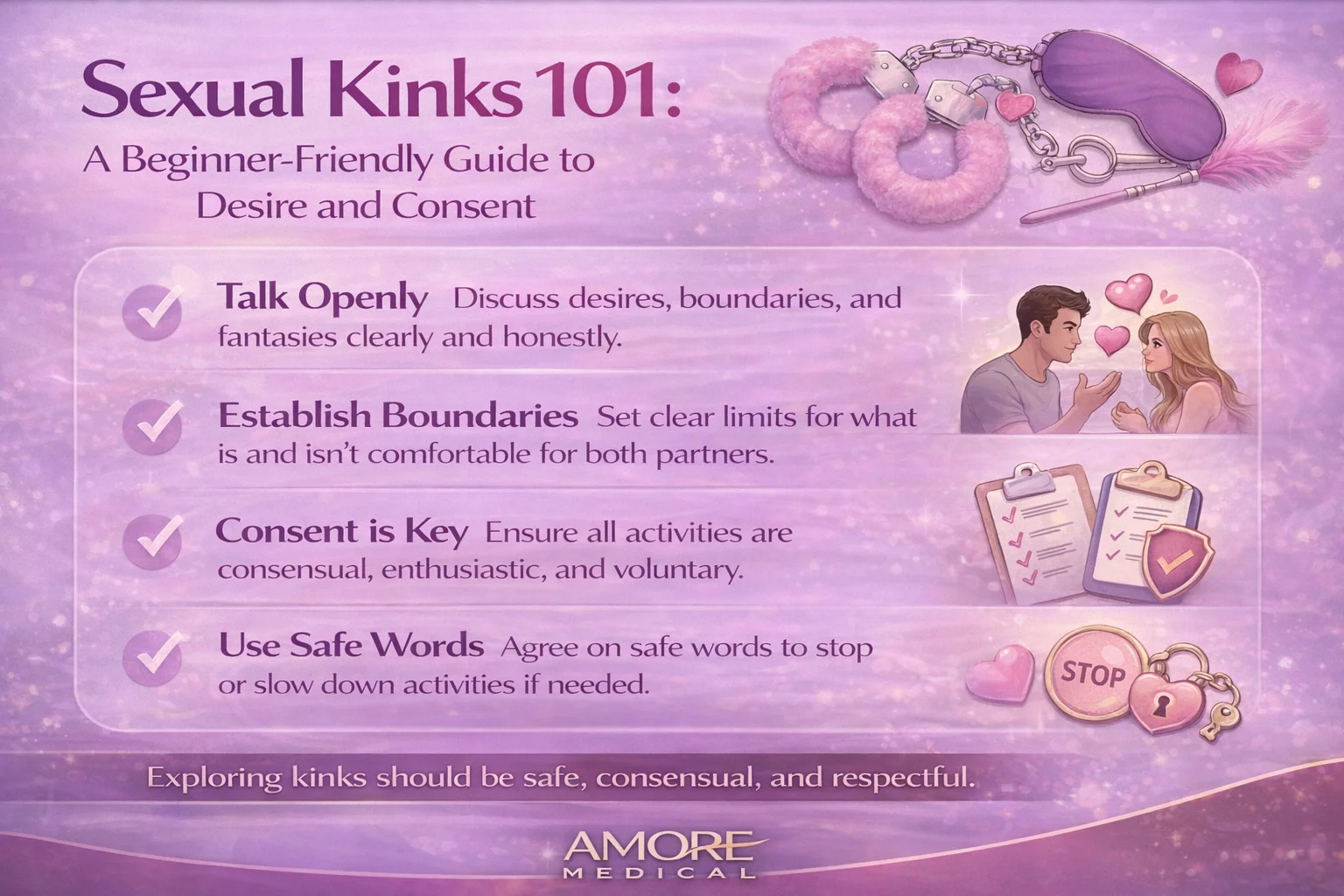
If this article could make only one point, it would be this: consent is the foundation of all healthy kink exploration. Not implied consent. Not reluctant consent. Not “I guess so.” Real consent is informed, enthusiastic, and ongoing. That means both people know what is being discussed, feel free to ask questions, and understand they can change their mind at any point.
Consent matters in every kind of sex, but it becomes even more important in kink because the emotional stakes can be higher. Power exchange, role-play, restraint, humiliation themes, or other intense experiences can affect people physically and emotionally in ways that deserve extra care. The stronger the scenario, the stronger the need for trust and communication.
For beginners, that usually means slowing down. It means discussing what sounds interesting, what feels off-limits, what words mean “pause” or “stop,” and how each person wants to be checked on during and after the experience. Those conversations are not awkward extras. They are part of what makes the experience safe enough to be enjoyable.
How to Talk About Kinks With a Partner
For many people, the hardest part is not trying something new. It is bringing it up. Talking about a kink can feel vulnerable because it touches on fear of rejection, embarrassment, and misunderstanding. That is why tone matters. A calm, curious conversation usually works better than a dramatic confession.
Instead of presenting a kink as a demand, it can help to frame it as a topic for exploration. You might say that you have been thinking about a certain theme, that you are not assuming anything, and that you want to know how your partner feels. That gives the other person room to respond honestly instead of feeling cornered.
Good conversations about kink usually include:
- what sounds appealing and why,
- what feels uncomfortable or off-limits,
- what kind of pace feels manageable,
- how either person can stop or check in.
Just as important, people need room to say no. A partner does not owe participation simply because you were brave enough to ask. Respecting a no is part of sexual maturity. In healthy relationships, honesty is more valuable than forced agreement.
What Makes a Kink Experience Safe?
Safety in kink is not only about preventing injury. It is also about preventing emotional harm, confusion, and pressure. A scenario can be physically mild and still feel emotionally overwhelming if it was poorly discussed. On the other hand, something that sounds intense on paper may feel more manageable when it is carefully negotiated, clearly limited, and built on trust.
For beginners, safety usually comes from structure. That means talking beforehand, setting boundaries, agreeing on clear stop signals, and checking in afterward. It also means starting smaller than your fantasy. Imagination often moves faster than the nervous system. What sounds exciting in theory may feel very different in real life. A slower first step usually creates a better experience than trying to do too much too soon.
It also helps to keep expectations realistic. The first time exploring a kink may feel awkward, funny, emotional, or underwhelming. That does not mean it went badly. It often just means you are learning. A beginner mindset should leave room for adjustment rather than perfection.
Beginner-Friendly Ways to Explore Without Overwhelming Yourself
When people look up sexual kinks for beginners, they often assume the first step has to be a full, dramatic experience. It does not. In many cases, the safest and most satisfying first step is much smaller. Exploration can begin with conversation, reading, fantasy-sharing, or light role dynamics without jumping into something physically or emotionally intense.
Beginners often do best when they focus on one variable at a time. That might mean exploring a tone, a power dynamic, or a new communication style before adding more complex elements. The body and mind both need time to process new experiences. Going slowly helps you notice what actually feels exciting, what feels neutral, and what feels uncomfortable.
This is also where aftercare becomes important. Aftercare refers to what happens after the experience: the check-in, reassurance, practical comfort, or emotional decompression that helps both people feel settled. For some couples, that looks like talking. For others, it may be quiet closeness, reassurance, water, a blanket, or simply asking, “How are you feeling?” Aftercare is not overly formal. It is a recognition that intense or vulnerable experiences deserve a thoughtful landing.
Common Myths About Kinks
A lot of shame around kink comes from misinformation. One of the biggest myths is that having a kink means someone is damaged or dangerous. That is not true. Adults can have consensual, ethical kinks and still have a very healthy relationship to intimacy. Another myth is that kink always has to be extreme. In reality, many people explore kink in mild, highly structured ways that prioritize communication over intensity.
There is also a myth that if you introduce a kink into a relationship, everything about your sex life has to change. That is not true either. Some couples incorporate an occasional interest while keeping most of their sexual connection unchanged. Others try something once and decide it is not for them. Exploration does not have to become identity, and curiosity does not have to become routine.
Another harmful myth is that if someone consents once, they have agreed forever. Consent does not work that way. People can change their mind. They can renegotiate. They can realize something sounded appealing but did not feel good in practice. Healthy intimacy makes room for that flexibility.
Red Flags Beginners Should Take Seriously
Because kink relies so heavily on trust, it is important to recognize when something is not healthy. A person who pressures you, mocks your limits, ignores agreed boundaries, refuses to discuss safety, or acts as though consent ruins the mood is not creating a safe dynamic. Those are warning signs, not personality quirks.
Beginners should be especially cautious around anyone who:
- treats your discomfort as something to “push through,”
- acts insulted when you ask questions,
- dismisses safe words or check-ins,
- tries to isolate kink from respect and communication.
Healthy exploration should leave you feeling clearer, not more confused. It should make you feel respected, not trapped. If something feels off, you do not need a perfect explanation to step back.
Kinks, Anxiety, and Sexual Confidence
For some people, kink curiosity overlaps with sexual anxiety. They may wonder whether wanting something different means they are abnormal. Others may worry they are not exciting enough if they are not interested in kink. Neither fear is helpful. Sexual confidence does not come from fitting into a trend. It comes from understanding your desires, respecting your boundaries, and communicating honestly.
This is particularly relevant for people who already feel insecure about intimacy because of low libido, performance concerns, or changes in sexual function. In those cases, adding something new should not become another source of pressure. It should only be explored if it genuinely supports connection and comfort. A healthy kink conversation should reduce shame, not increase it.
Sometimes what a person really needs is not more novelty. It is more safety, more communication, or better support for their overall sexual health. That is an important distinction. Desire grows best in an environment where people feel physically and emotionally secure.
When to Pause and Ask Bigger Questions
If exploring kink consistently brings up fear, distress, relationship conflict, or confusion about consent, it may help to slow down and look at the bigger picture. Are both people genuinely interested, or is one person agreeing to avoid conflict? Is the curiosity rooted in connection, or in pressure to keep someone else’s attention? Is there enough trust in the relationship to support vulnerability?
These questions do not mean kink is a problem. They simply help clarify whether the current situation is healthy. Sometimes the most responsible choice is not to move forward yet. Sometimes it means starting with a conversation rather than an experience. Sometimes it means addressing communication or sexual health concerns first.
At Amore Medical, sexual wellness is approached with discretion, compassion, and evidence-based care. For some people, questions about kink are really questions about confidence, intimacy, desire, or how to talk openly with a partner. For others, low libido, performance issues, or hormonal changes may be affecting how safe and connected sex feels overall. Those concerns deserve thoughtful support, not shame.
Final Thoughts
If you are searching for sexual kinks for beginners, the most important thing to remember is that healthy exploration starts with consent, communication, and self-awareness. Kinks are not automatically a problem, and curiosity is not something to fear. What matters is how respectfully you approach that curiosity and whether everyone involved feels informed, comfortable, and free to say yes, no, or not yet.
The beginner mindset is not about doing the most. It is about learning the most. Learn what interests you. Learn what your partner actually wants. Learn where your boundaries are. Learn how to talk clearly before anything happens, not after confusion begins. That is what makes desire feel safer and more satisfying.
In the end, the healthiest sexual experiences are not built on pressure or performance. They are built on trust. Whether a kink becomes part of your sex life or simply something you understand better, that trust is what supports real intimacy.