If you have been searching for how to increase sperm volume, you are probably hoping for a simple answer. Maybe you noticed a smaller ejaculate than usual. Maybe you are trying to conceive and wondering whether more semen means better fertility. Or maybe you are seeing claims online about drinks, supplements, or “one-night fixes” that promise a dramatic increase by tomorrow morning.
The most honest answer is this: you may be able to influence how much semen you ejaculate in the short term, but you usually cannot create a major, meaningful increase in true sperm output overnight. That distinction matters. In men’s sexual wellness and fertility care, people often use the word “sperm” when they really mean semen or ejaculate volume. Those are related, but they are not the same thing.
That is where a lot of confusion starts. A larger-looking ejaculation does not automatically mean you have more sperm, better fertility, or better sexual health. At the same time, a smaller ejaculation does not automatically mean something is wrong. The more useful approach is to understand what semen actually is, what can realistically change from one day to the next, and what symptoms may signal that it is time for a proper evaluation.
Sperm and Semen Are Not the Same Thing
Before talking about what can increase volume, it helps to separate two terms that people often blend together. Sperm are the reproductive cells. Semen is the fluid released during ejaculation that carries sperm. In sexual medicine and male reproductive health, that difference is important because most of the visible ejaculate is not made of sperm cells. It is mostly fluid produced by the seminal vesicles and prostate, with sperm making up only a small part of the total volume.
That means a person can have a fairly large ejaculation without having a high sperm count, and a person can have a smaller volume while still having sperm present. This is one reason fertility specialists do not judge reproductive health by appearance alone. A semen analysis looks at multiple factors, including volume, sperm concentration, total sperm number, movement, and shape. Volume is only one piece of the picture.
In practical terms, this also means that when people ask how to increase sperm volume, what they are usually asking is one of three different questions:
- How can I make my ejaculation look or feel larger?
- How can I improve semen volume on a test?
- How can I improve fertility?
Those questions overlap, but they are not identical. The right answer depends on which one you are actually trying to solve.
Can You Increase Sperm Volume Overnight?
Usually not in a dramatic way. There is no evidence-based shortcut that makes your body produce a major jump in healthy sperm cells overnight. Sperm are made continuously in the testicles, but they take time to mature. That means true sperm-related improvements do not happen by tomorrow because you took a supplement, drank more water, or ate a certain food at dinner.
What can change more quickly is the visible semen volume from one ejaculation to the next. The most common short-term reason for a lower-volume ejaculation is simple timing. If you ejaculated recently, the next ejaculation may be smaller. If more time has passed since your last ejaculation, the next one may look larger. That is one reason abstinence before a semen analysis is usually standardized. Semen volume naturally varies depending on the interval between ejaculations.
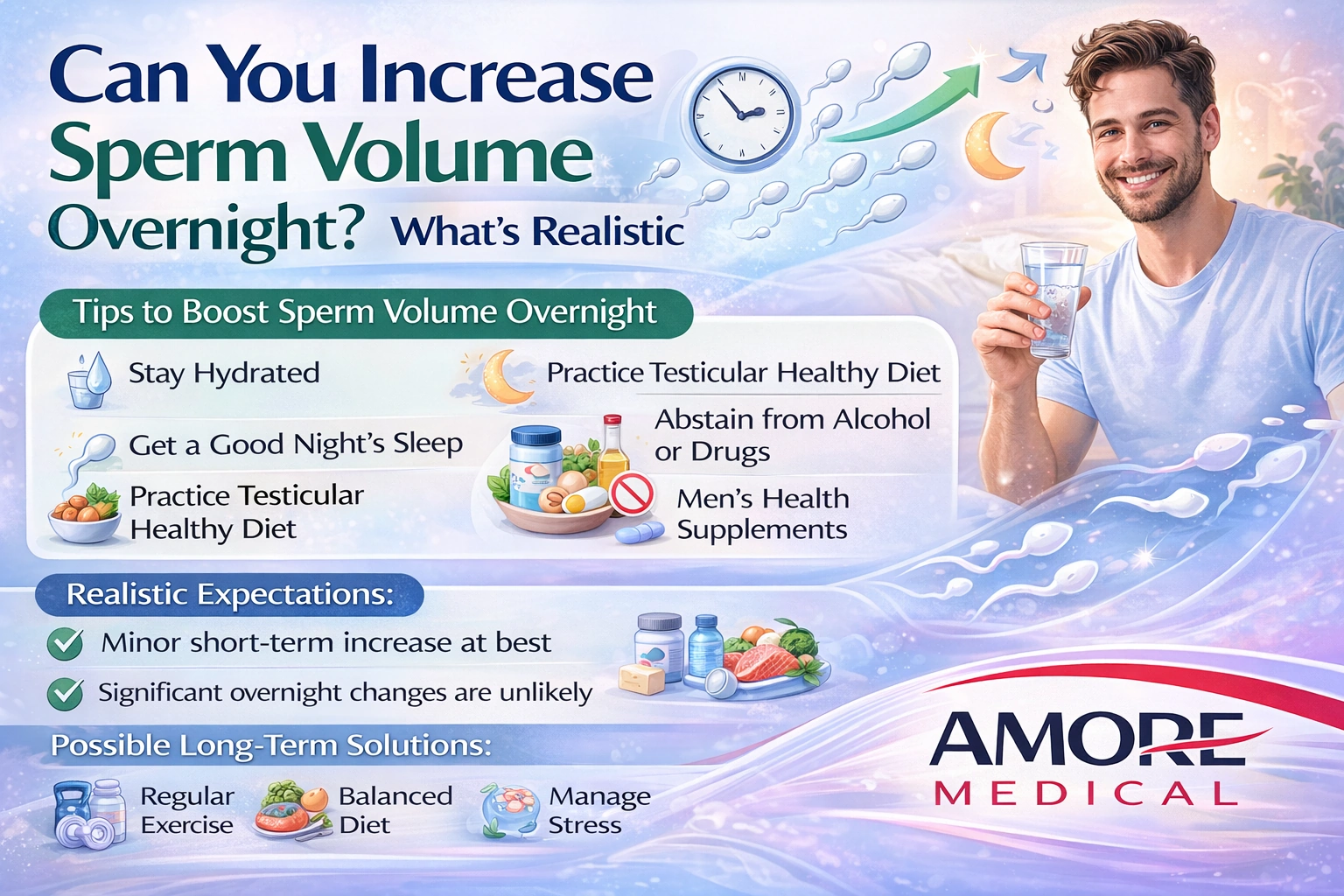
So if you are asking whether you can “boost” volume by tomorrow, the realistic answer is that you might notice a modest difference from short-term factors such as not ejaculating again too soon, being well hydrated, and not going into sex tired, rushed, or under-aroused. But those changes are usually modest. They are not the same as rebuilding sperm quality or transforming fertility overnight.
What May Make a Short-Term Difference
In intimate wellness care, these are the short-term factors most likely to affect how much ejaculate you notice:
- Time since your last ejaculation. More frequent ejaculation often means somewhat less semen volume per ejaculation.
- Hydration status. Dehydration can make body fluids feel more concentrated overall, while better hydration may improve how semen appears or feels.
- Level of arousal. Rushed sex or ejaculation without much buildup can make the release feel less substantial.
- Alcohol, fatigue, and stress. These do not help sexual function, and they can indirectly affect the experience of ejaculation.
None of these is a miracle solution. They simply explain why ejaculate volume can vary from day to day without that necessarily meaning your fertility has changed.
What Is Actually Considered “Low”?
This is where online advice often becomes misleading. People frequently worry about a “small load” without having any real reference point. In a clinical semen analysis, the lower reference level for semen volume is around 1.4 mL. That means some men who think their ejaculation looks small may still fall within the expected range, while others with genuinely low volume need a closer look at why it is happening.
Low semen volume also should not be confused with low sperm count. These are separate measurements. A semen sample can have lower volume but still contain sperm. It can also look normal in volume while having a low sperm concentration. That is why fertility concerns cannot be answered by appearance alone.
If you are trying to conceive, focusing only on visual volume can send you in the wrong direction. What matters more is the whole semen profile and whether there are symptoms suggesting a problem with ejaculation, sperm production, or sperm delivery.
Why Your Ejaculate May Seem Smaller Than Usual
Sometimes the reason is simple. You ejaculated recently. You were dehydrated. You were not especially aroused. You were comparing yourself to unrealistic expectations from pornography or internet myths. In those cases, the concern is often more about perception than pathology.
But there are also medical reasons semen volume can be lower than expected. In men’s reproductive and sexual health, some of the more common possibilities include retrograde ejaculation, an obstruction affecting semen flow, hormonal issues, and changes involving the prostate or seminal vesicles. Retrograde ejaculation is one of the most important to recognize because it can cause very little or no semen to come out during orgasm even though orgasm still happens. Instead of exiting through the penis, semen goes backward into the bladder.
This can happen after certain surgeries, with some medications, or because of nerve-related issues such as diabetes or neurologic disease. It is not usually harmful by itself, but it can matter a great deal if fertility is a goal.
Medical Causes Worth Considering
If low volume is persistent rather than occasional, providers in sexual wellness and fertility medicine may think about:
- retrograde ejaculation,
- ejaculatory duct obstruction or another blockage,
- hormonal imbalance,
- changes involving the seminal vesicles or prostate,
- side effects from medication, or
- improper semen collection when testing fertility.
The last point may sound minor, but it matters. Fertility clinics know that incomplete collection is one of the most common reasons a semen sample looks lower than expected. That is one reason repeat testing is often recommended.
Does More Semen Mean Better Fertility?
Not necessarily. This is one of the most important points in male reproductive health. Larger volume does not automatically mean better sperm count, better sperm movement, or better chances of pregnancy. A person can have a relatively generous semen volume and still have a low sperm concentration. Likewise, a smaller sample can still contain sperm and may not mean infertility by itself.
When fertility is the real concern, the right question is not only how to increase sperm volume. It is also:
- How many sperm are present?
- How well are they moving?
- Are they shaped normally enough to support fertility?
- Is semen getting out in the usual way?
This is why a semen analysis is so much more useful than guessing from appearance. It gives a clearer picture of whether the issue is volume, sperm count, motility, morphology, inflammation, or something else entirely.
What Can Improve Things Over Time?
If your goal is true reproductive improvement, overnight fixes are not the right model. Sperm maturation takes weeks, not hours. In practical terms, that means lifestyle or treatment changes usually need time before they show up in a semen analysis. That delay can feel frustrating, but it is also useful because it sets realistic expectations.
In men’s sexual wellness and fertility care, the most worthwhile long-term habits are usually the least flashy. Maintain a healthy weight. Get enough sleep. Manage chronic stress. Avoid smoking and recreational drugs. Be thoughtful about alcohol. Reduce heat exposure to the testicles when possible. Address chronic medical issues such as diabetes. Treat infections or hormone problems when they exist. And if fertility is the goal, get real testing instead of relying on myths.
These steps are not dramatic, but they are far more credible than products promising a visible change by the next day. In evidence-based care, slow improvement is usually the real improvement.
Reasonable Goals for the Next Few Months
If you are trying to support semen quality and overall reproductive health, a more realistic short list looks like this:
- stop chasing overnight promises,
- support hydration and general health,
- avoid back-to-back ejaculations if your goal is a larger single sample,
- review medications and health issues with a provider if volume has changed, and
- consider a semen analysis if fertility is a concern or the change keeps happening.
That is a more grounded way to think about the issue, and it tends to lead to much more useful answers.
What About Semen Color and Smell?
Color and smell deserve attention too, especially because they can be alarming when they change. Normal semen is typically whitish to grayish, sometimes with slight variation. A yellow tint is not always a problem. It can happen with aging, abstinence, smoking, certain foods, medications, supplements, or sometimes a bit of urine mixing in. But yellow or green semen can also be associated with infection, so the full context matters.
Red, pink, brown, or black discoloration can point to blood in the semen, sometimes fresh and sometimes older blood. Blood in semen often turns out to be benign and may clear on its own, especially in younger men or after procedures, but repeated or persistent blood should not be brushed off. If it keeps happening, lasts several weeks, or comes with pain during urination or ejaculation, it is worth getting checked.
Smell is similar. Semen does have a natural odor, and minor differences do not necessarily mean disease. But a distinctly foul smell, especially when paired with pain, burning, discharge, fever, or urinary symptoms, should raise concern for infection or inflammation rather than being treated as a harmless curiosity.
Changes That Deserve Attention
In intimate health care, these are some of the signs that should move you from “watch and wait” to “get evaluated”:
- repeatedly low or shrinking ejaculate volume,
- very little or no semen during orgasm,
- cloudy urine after orgasm,
- blood in semen that keeps coming back,
- yellow or green semen with pain, burning, or discharge,
- pain with ejaculation, or
- fertility difficulty despite regular unprotected intercourse.
These symptoms do not always mean something serious, but they do justify a proper conversation with a provider.
When Fertility Is the Real Question
A lot of men start by worrying about semen volume when what they are really worried about is fertility. That makes sense. Semen is visible, while sperm quality is not. But if conception is the goal, volume alone is too blunt a measure. A person can have normal-looking semen and still have low sperm concentration, poor motility, or another issue affecting fertility. On the other hand, some men with lower-volume samples are still able to conceive.
If you and your partner have been trying to get pregnant without success, the better next step is not another supplement ad. It is evaluation. A semen analysis gives more meaningful information than visual comparison ever will. It also helps separate concerns about ejaculate volume from concerns about sperm production and delivery.
When to Stop Guessing and Talk to a Provider
There is a big difference between wanting more confidence and having symptoms that need attention. You should consider a medical evaluation if your ejaculate has clearly decreased and stayed that way, if you often have very little semen or dry orgasms, if you notice blood, if color changes persist, if ejaculation is painful, or if fertility is a concern.
In modern intimate wellness and men’s reproductive health, these changes are not treated as something you should simply monitor forever on your own. Sometimes the explanation is straightforward, such as more frequent ejaculation, dehydration, stress, or temporary variation. But when the pattern becomes consistent, uncomfortable, or emotionally stressful, it makes sense to move beyond internet advice and get real answers. In sexual medicine, persistent changes in semen volume, color, or comfort deserve context, because appearance alone cannot tell you whether the issue is harmless variation or something worth treating.
This matters even more when fertility is part of the conversation. A person may focus on how the ejaculate looks or how much comes out, but fertility care looks deeper than appearance. In male wellness and reproductive medicine, the goal is not only to reassure. It is to understand whether the concern involves semen volume, sperm health, ejaculation mechanics, inflammation, hormone changes, or another issue affecting sexual and reproductive function.
Signs It Is Time to Book an Appointment
In sexual wellness care, the most useful sign is repetition. One unusual ejaculation may not mean much. A recurring pattern is different. It is worth scheduling an evaluation if you notice:
- consistently low semen volume over time,
- very little or no visible semen during orgasm,
- blood in the semen, especially if it returns,
- pain, burning, or pressure with ejaculation,
- persistent changes in color or smell,
- urinary symptoms after ejaculation, or
- difficulty conceiving with a partner.
These symptoms do not automatically point to a serious condition, but they do suggest that the issue is important enough to evaluate properly. In intimate care, early clarity is often more helpful than months of guessing.
Why Persistent Changes Should Not Be Ignored
One reason this topic causes so much confusion is that semen changes can be influenced by several different factors at once. Timing between ejaculations can affect volume. Stress can affect arousal and sexual response. Medications, health conditions, or age-related changes may also play a role. Because there are so many possibilities, it is easy for people to assume the change is minor or temporary even when it keeps happening.
That is where a provider becomes valuable. In a men’s health or intimate medicine setting, the goal is not to jump to the worst-case scenario. It is to separate normal variation from patterns that deserve a closer look. A repeated change in ejaculate volume, painful ejaculation, or recurring discoloration may have a treatable explanation. And when fertility is a concern, a clear workup is much more useful than trying to judge reproductive health by appearance alone.
When the Concern Is More About Fertility Than Confidence
Sometimes the real question is not “Why is my semen different?” but “Could this affect my ability to conceive?” That is an important distinction. In reproductive wellness, semen volume is only one piece of the picture. The visible amount of ejaculate does not fully answer whether sperm are present in healthy numbers or moving the way they should.
That is why fertility concerns usually call for more than self-observation. If pregnancy is the goal and conception is not happening, a formal evaluation can help clarify whether the issue relates to semen volume, sperm count, sperm movement, hormone patterns, or another factor. This is one of the biggest reasons to stop relying on assumptions and get real data instead.
What a Provider May Want to Know
In sexual medicine and reproductive care, the appointment often begins with pattern recognition. A provider may ask when the change started, whether it happens every time or only sometimes, whether there is pain, whether blood has appeared more than once, and whether there are any urinary symptoms, medication changes, or fertility goals in the background. This type of conversation is often more reassuring than people expect, because it turns vague worry into specific information.
Patients usually get more out of the visit when they are honest about details that may feel awkward but are clinically useful. For example, it helps to mention whether the volume change happened suddenly or gradually, whether orgasm feels different, whether ejaculation is dry or weak, and whether the concern is primarily about appearance, comfort, or fertility.
Helpful Details to Bring Up
In a sexual wellness or men’s health consultation, these details can make the discussion more productive:
- how long the change has been happening,
- whether it is occasional or consistent,
- any pain, pressure, or burning with ejaculation,
- changes in semen color, smell, or texture,
- recent illnesses, medication changes, or procedures, and
- whether fertility is a current concern.
These details help the provider decide whether reassurance is enough, whether testing makes sense, or whether the pattern points to a more specific sexual health or reproductive issue that should be evaluated further.
What Testing May Be Considered
In intimate wellness and male fertility care, testing depends on the concern. When fertility is the main issue, semen analysis is often one of the most useful starting points because it gives a broader picture than appearance alone. When pain, blood, or repeated urinary symptoms are present, the evaluation may focus more on infection, inflammation, irritation, or other urologic causes. The important point is that testing should match the symptom pattern, not just the anxiety around it.
This is another reason to seek care earlier rather than later. The longer people rely only on internet tips, the more likely they are to overlook the difference between a confidence concern and a symptom that deserves a proper medical explanation. In sexual wellness care, getting clarity early often reduces stress and helps patients make smarter decisions about what to do next.
Why Getting Evaluated Can Actually Lower Anxiety
Many people delay the appointment because they are worried about what they might hear. In practice, a good evaluation often does the opposite of what they fear. It replaces uncertainty with a plan. Sometimes that plan is simple reassurance. Sometimes it is follow-up testing. Sometimes it is treatment for a clear, manageable issue. But even that is usually easier than months of second-guessing every change in volume, color, or sensation.
That is one of the real benefits of working with a provider in sexual medicine, intimate health, or reproductive wellness. You are not left to interpret every symptom on your own. You get context, clinical judgment, and a better sense of what matters now versus what can simply be monitored.
In sexual wellness practice, this is where a thoughtful workup can make a real difference. Sometimes the answer is reassuring: natural variation, recent ejaculation, dehydration, or no significant issue at all. Other times the answer is something worth addressing, such as retrograde ejaculation, a blockage, hormone imbalance, prostatitis, or another urologic concern. The point is not to assume the worst. It is to stop relying on guesswork when the pattern is persistent.
The Bottom Line on “Overnight” Increases
So, can you increase sperm volume overnight? Not in the dramatic, biologically meaningful way many people hope for. You may see a modest difference from short-term factors such as ejaculation timing, hydration, and arousal. But true sperm-related change and meaningful fertility improvement usually take longer because sperm production and maturation happen over weeks to months, not hours.
That is why the most useful answer to how to increase sperm volume is not a miracle hack. It is a realistic plan. Understand the difference between semen and sperm. Know that volume and fertility are not the same thing. Pay attention to recurring symptoms such as low volume, pain, blood, unusual color, or dry orgasms. And if the concern is not going away, get evaluated instead of guessing.
In men’s sexual wellness, clarity is usually more valuable than hype. Once you know what you are actually measuring, the next step becomes much easier to choose.